
Paper: GS – II, Subject: Governance, Topic: Government policies, Issue: POCSO Act, 2012.
Context:
The POCSO Act, 2012, protects children from sexual abuse through a gender-neutral framework, allowing prosecution of offenders regardless of gender, as affirmed by its text, intent, and purpose. Arguments for Gender-Neutrality
Key Highlights:
The POCSO Act is gender-neutral for three primary reasons:
Textual Interpretation:
General Clauses Act, 1897: Section 13(1) of the General Clauses (GC) Act, 1897, states that “words importing the masculine gender shall be taken to include females.”
- This means that when the POCSO Act uses the pronoun “he” to refer to the perpetrator, it should be interpreted to include “she” as well, unless explicitly stated otherwise within the POCSO Act itself.
Definition of Penetrative Sexual Assault:
- Section 3 of the POCSO Act defines penetrative sexual assault to include acts beyond penile penetration, such as digital or object penetration, or oral penetration.
- These acts can be committed by female perpetrators, further supporting the gender-neutral interpretation.
- Scope of the Provision: The provision also covers situations where a person makes a child perform any of the listed penetrative acts with themselves or even with a third person, further underscoring its gender-neutral scope.
Legislative Intent:
- Official Statements: Reliable official sources confirm the legislative intent of keeping the POCSO Act gender-neutral.
- The Ministry of Women and Child Development, Government of India, stated unambiguously that POCSO “is a gender-neutral Act” in a written response to a question in the Lok Sabha, dated December 20, 2024.
- The “Statement of Objects and Reasons” of the Protection of Children from Sexual Offences (Amendment) Bill, 2019, tabled in the Lok Sabha, also specified that the POCSO Act was “gender neutral.”
Comparison with Bharatiya Nyaya Sanhita (BNS), 2023:
- The provision on “rape” in Section 63 of the Bharatiya Nyaya Sanhita (BNS), 2023 (the erstwhile Section 375 of the Indian Penal Code, 1860), specifies that “a man” commits rape if he commits certain forms of penetrative sexual acts against “a woman.”
- This is a gender-specific provision.
- If Parliament intended to make the POCSO Act gender-specific, the wording of Section 3 of the POCSO Act, which covers substantially the same sexual acts as Section 63 of the BNS, would also contain the same gender-specific language.
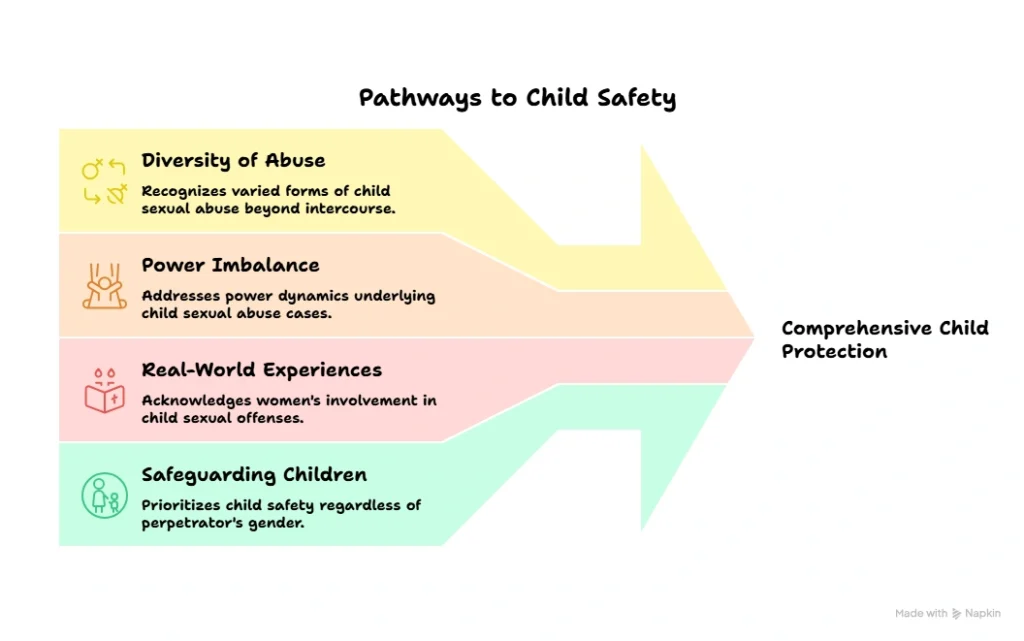
Interpreting the POCSO Act as gender-neutral, concerning both victims and perpetrators, aligns with its text, legislative intent, and purpose. This ensures that all children are protected from sexual abuse, regardless of the perpetrator’s gender, and that justice is served to all victims.
https://www.thehindu.com/opinion/op-ed/the-pocso-act-is-gender-neutral-by-design/article70287919.ece
La Excellence IAS Academy, the best IAS coaching in Hyderabad, known for delivering quality content and conceptual clarity for UPSC 2025 preparation.
FOLLOW US ON:
◉ YouTube : https://www.youtube.com/@CivilsPrepTeam
◉ Facebook: https://www.facebook.com/LaExcellenceIAS
◉ Instagram: https://www.instagram.com/laexcellenceiasacademy/
GET IN TOUCH:
Contact us at info@laex.in, https://laex.in/contact-us/
or Call us @ +91 9052 29 2929, +91 9052 99 2929, +91 9154 24 2140
OUR BRANCHES:
Head Office: H No: 1-10-225A, Beside AEVA Fertility Center, Ashok Nagar Extension, VV Giri Nagar, Ashok Nagar, Hyderabad, 500020
Madhapur: Flat no: 301, survey no 58-60, Guttala begumpet Madhapur metro pillar: 1524, Rangareddy Hyderabad, Telangana 500081
Bangalore: Plot No: 99, 2nd floor, 80 Feet Road, Beside Poorvika Mobiles, Chandra Layout, Attiguppe, Near Vijaya Nagara, Bengaluru, 560040