
Paper: GS – I/ II, Subject: Society and Social Justice, Topic: Welfare schemes, mechanisms, laws and institutions related to children, Issue: Social Media ban: A Flawed Solution.
Context:
Following tragic events, such as the suicide of three sisters in Ghaziabad, there is a strong public demand for immediate action, often leading to calls for social media bans. While the sentiment is understandable, such bans offer a false sense of security and fail to address the underlying complexities of the issue.
- Research suggests a correlation between heavy social media use and negative mental health outcomes in adolescents, including: Increased anxiety, Depressive symptoms, Self-harm and Body image dissatisfaction.
Key Highlights:
Why Bans Won’t Work in India?
Copying the approach of countries like Australia, which have implemented social media bans for those under 16, would be disastrous for India due to several reasons:
1. Technical Porosity:
- VPNs and the Dark Web: Bans are easily circumvented by tech-savvy adolescents using VPNs. This can drive young users to unmoderated corners of the dark web, where they are more vulnerable to grooming and extremism.
- Identity Verification Risks: Enforcement through identity verification could lead to mass surveillance, linking every social media account to a government ID.
2. Ignoring Adolescent Development: Social media as a Lifeline: social media can be a vital source of support and community for marginalized adolescents, including those in rural areas, urban slums, queer teens, and differently-abled individuals. Bans would cut off this lifeline.
3. Democratic Deficit: Lack of Consultation: Policies affecting young people are often made without consulting them, ignoring their perspectives and needs.
4. Exacerbating Gender Inequality:
- Unequal Access: Social media bans are likely to disproportionately affect girls from lower-income households.
- Limited Social Mobility: This will prevent girls from using the Internet for their social mobility and charting their future. Data shows that only 33.3% of women in India reported having ever used the Internet, compared to 57.1% of men.
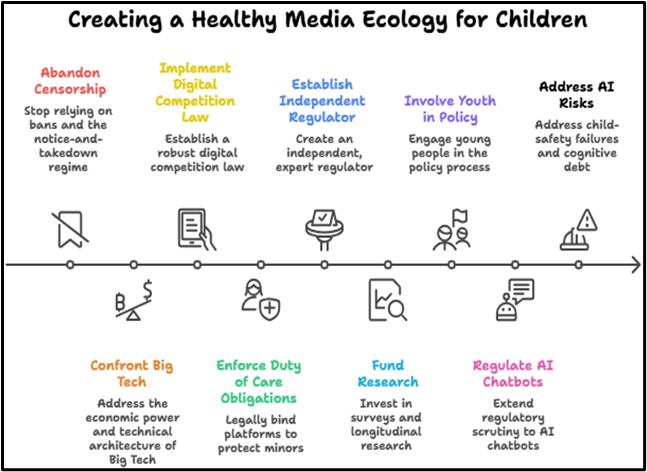
Social media bans oversimplify a complex issue, offering false control while risking youth rights. Effective solutions lie in regulating tech companies, promoting digital literacy, and creating healthier media spaces, alongside consistent, balanced approaches to technology governance.
Source: (The Hindu)
La Excellence IAS Academy, the best IAS coaching in Hyderabad, known for delivering quality content and conceptual clarity for UPSC 2026 preparation.
FOLLOW US ON:
◉ YouTube : https://www.youtube.com/@CivilsPrepTeam
◉ Facebook: https://www.facebook.com/LaExcellenceIAS
◉ Instagram: https://www.instagram.com/laexcellenceiasacademy/
GET IN TOUCH:
Contact us at info@laex.in, https://laex.in/contact-us/
or Call us @ +91 9052 29 2929, +91 9052 99 2929, +91 9154 24 2140
OUR BRANCHES:
Head Office: H No: 1-10-225A, Beside AEVA Fertility Center, Ashok Nagar Extension, VV Giri Nagar, Ashok Nagar, Hyderabad, 500020
Madhapur: Flat no: 301, survey no 58-60, Guttala begumpet Madhapur metro pillar: 1524, Rangareddy Hyderabad, Telangana 500081
Bangalore: Plot No: 99, 2nd floor, 80 Feet Road, Beside Poorvika Mobiles, Chandra Layout, Attiguppe, Near Vijaya Nagara, Bengaluru, 560040