
Paper: GS – III, Subject: Environment, Ecology and Disaster Management, Topic: Impact of climate change on productivity, Issue: Heat Stress Policy in India’s Textile Sector.
Context:
India’s textile sector is benefiting from global supply chain shifts but is simultaneously facing a severe heat-induced productivity crisis due to rising temperatures linked to climate change.
Key Takeaways:
Background:
- Global Trade Dynamics: India is becoming a preferred destination for textile manufacturing as political instability in traditional hubs like Bangladesh drives international buyers to Indian clusters.
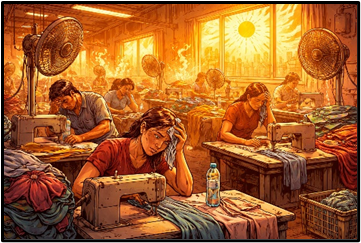
- Heat Stress: However, Indian workers experience significant productivity losses due to extreme heat. For example, in Tamil Nadu with temperatures exceeding 40°C leading to a 50% reduction in work capacity is seen.
- Economic Impact: Between 2001 and 2020, India lost approximately 259 billion labor hours annually due to heat stress, translating to over $600 billion in economic losses.
The Crisis of Productivity:
- Operational Challenges: Factories in regions like Palghar and Karnataka report production capacity drops of up to 50% due to hazardous heat conditions.
- Health Risks: Extreme temperatures increase the likelihood of workplace injuries and health issues, such as heatstroke and dehydration.
- Equipment Failures: Industrial machinery often overheats, leading to operational shutdowns and disruptions in production schedules.
The Supply Chain Trap:
- Pressure from Global Brands: Strict delivery deadlines and financial penalties create a dilemma for factory managers, forcing them to choose between worker health and meeting shipment deadlines.
- Thermodynamic Bottleneck: The surge in orders collides with record-breaking heat, creating a regressive tax on vulnerable workers.
- Historical Context: Past disruptions, like the COVID-19 pandemic, have shown that workers bear the brunt of financial losses when brands cancel orders.
The Way Forward:
- Policy Integration: Recognizing heat stress as a supply chain risk is crucial for developing industrial policies that account for climate projections.
- Heat-Action Plans: Mandatory plans should be established to enforce temperature thresholds and ensure worker health assessments.
- Financing Reforms: Banks must incorporate climate risks into loan assessments, and governments should support investments in cooling technologies.
- Strengthening Labor Protections: Codes must explicitly address heat stress, ensuring access to clean water and shaded rest areas for workers.
- Innovation and Adaptation: Targeted R&D grants should focus on developing heat-tolerant crops and energy-efficient manufacturing processes.
- Fair Pricing from Buyers: International brands must contribute to adaptation costs through fairer pricing and longer lead times.
In conclusion, the textile industry’s future hinges on addressing the thermal challenges posed by climate change. Without proactive measures, the human cost will continue to escalate, impacting both workers and the industry’s viability.
Source: (The Indian Express, The Hindu, Live Mint)
La Excellence IAS Academy, the best IAS coaching in Hyderabad, known for delivering quality content and conceptual clarity for UPSC 2026 preparation.
FOLLOW US ON:
◉ YouTube : https://www.youtube.com/@CivilsPrepTeam
◉ Facebook: https://www.facebook.com/LaExcellenceIAS
◉ Instagram: https://www.instagram.com/laexcellenceiasacademy/
GET IN TOUCH:
Contact us at info@laex.in, https://laex.in/contact-us/
or Call us @ +91 9052 29 2929, +91 9052 99 2929, +91 9154 24 2140
OUR BRANCHES:
Head Office: H No: 1-10-225A, Beside AEVA Fertility Center, Ashok Nagar Extension, VV Giri Nagar, Ashok Nagar, Hyderabad, 500020
Madhapur: Flat no: 301, survey no 58-60, Guttala begumpet Madhapur metro pillar: 1524, Rangareddy Hyderabad, Telangana 500081
Bangalore: Plot No: 99, 2nd floor, 80 Feet Road, Beside Poorvika Mobiles, Chandra Layout, Attiguppe, Near Vijaya Nagara, Bengaluru, 560040