
Paper: GS – III, Subject: Disaster Management, Topic: Disaster Management, Issue: Rat-Hole Mining: Its Impact.
Context:
A deadly explosion at an illegally operated rat-hole coal mine in East Jaintia Hills, Meghalaya, killed 18 miners, highlighting the continued practice of banned and unsafe mining methods and governance failures in enforcement.
Key Takeaways:
What is Rat-Hole Mining?
- Rat Hole Mining is a method of extracting coal from narrow, horizontal seams, widely prevalent in Meghalaya.
- The term “rat hole” refers to the narrow pits dug into the ground, typically just large enough for one person to descend and extract coal.
- Once the pits are dug, miners descend using ropes or bamboo ladders to reach the coal seams.
- The coal is then manually extracted using primitive tools such as pickaxes, shovels, and baskets.
Rat-Hole mining is broadly of two types:
| Type | Method | Key Features |
| Side-cutting | Horizontal tunnels dug into hill slopes to reach coal seams. | Very narrow passages; thin coal seams (usually <2 m); workers crawl inside to extract coal. |
| Box-cutting | Rectangular surface opening made, then a vertical pit (100–400 ft) dug. | After reaching coal, horizontal rat-hole tunnels are created; highly risky due to depth and flooding. |
Rat-Hole Mining Hazards:
Safety Concerns:
- Lack of proper ventilation, structural support, and safety gear.
- Frequent accidents resulting in injuries and fatalities.
Environmental Impact:
- Causes land degradation and deforestation.
- Contributes to water pollution.
Rat-Hole Mining Challenges:
Socioeconomic Challenges: Practices persist due to economic factors.
- Lack of alternative livelihoods for local communities hinders regulation.
Regulatory Issues:
- Mines are often unregulated despite efforts to ban or control them.
- The practice continues to face severe criticism for its risks and environmental damage.
Ban on Rat-Hole Mining by NGT:
NGT Ban and Observations:
- The National Green Tribunal (NGT) banned rat-hole mining in 2014 and upheld the ban in 2015.
- Highlighted numerous fatalities caused by flooding in mining areas during the rainy season.
Focus on Meghalaya:
- The ban was specifically enforced in Meghalaya, where rat-hole mining was widely practiced for coal extraction.
- Meghalaya’s state government appealed the NGT’s order in the Supreme Court.
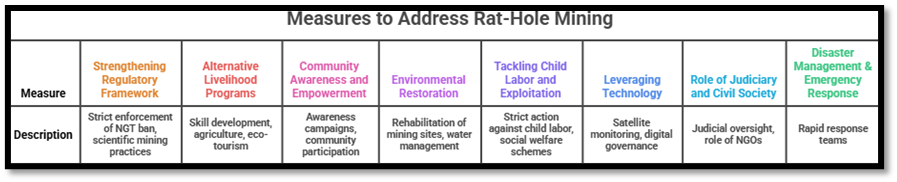
The Meghalaya mining tragedy reflects a recurring pattern of unsafe practices, weak enforcement, and economic compulsion. Without structural reforms, livelihood alternatives, and strict legal action against illegal operators, such disasters will continue to claim lives.
Source: (The Hindu)
La Excellence IAS Academy, the best IAS coaching in Hyderabad, known for delivering quality content and conceptual clarity for UPSC 2026 preparation.
FOLLOW US ON:
◉ YouTube : https://www.youtube.com/@CivilsPrepTeam
◉ Facebook: https://www.facebook.com/LaExcellenceIAS
◉ Instagram: https://www.instagram.com/laexcellenceiasacademy/
GET IN TOUCH:
Contact us at info@laex.in, https://laex.in/contact-us/
or Call us @ +91 9052 29 2929, +91 9052 99 2929, +91 9154 24 2140
OUR BRANCHES:
Head Office: H No: 1-10-225A, Beside AEVA Fertility Center, Ashok Nagar Extension, VV Giri Nagar, Ashok Nagar, Hyderabad, 500020
Madhapur: Flat no: 301, survey no 58-60, Guttala begumpet Madhapur metro pillar: 1524, Rangareddy Hyderabad, Telangana 500081
Bangalore: Plot No: 99, 2nd floor, 80 Feet Road, Beside Poorvika Mobiles, Chandra Layout, Attiguppe, Near Vijaya Nagara, Bengaluru, 560040