
Paper: GS – III, Subject: Science and Technology, Topic: Medical science and Health, Issue: Autism Spectrum Disorder.
Context:
The Supreme Court’s ruling against offering stem cell therapy as a clinical service for Autism Spectrum Disorder (ASD) outside of approved clinical trials.
Key Takeaways:
| About Stem Cell Therapy: Stem cell therapy is a form of regenerative medicine designed to repair damaged cells within the body by reducing inflammation and modulating the immune system. This phenomenon makes stem cell therapy a viable treatment option for various medical conditions. It can be used to treat a variety of medical conditions, such as autoimmune, inflammatory, and neurological disorders. What is Autism Spectrum Disorder? Autism spectrum disorder (ASD) is a developmental disability caused by differences in the brain. People with ASD may behave, communicate, interact, and learn in ways that are different from most other people. ASD begins before the age of 3 years and can last throughout a person’s life, although symptoms may improve over time. Symptoms: People with ASD often have problems with social communication and interaction, and restricted or repetitive behaviors or interests. They may also have different ways of learning, moving, or paying attention. |
Key Points of the Supreme Court Ruling:
- Stem cell therapy for Autism Spectrum Disorder (ASD) cannot be offered as a clinical service, except within approved and monitored research trials.
- There is a lack of established scientific evidence on the safety and efficacy of stem cell therapy for ASD.
- Due to scientific uncertainty, doctors cannot ensure informed consent by adequately explaining benefits and risks.
- Consent obtained is invalid as the prerequisite of full disclosure is unmet.
- Patient autonomy has limits and cannot justify scientifically unproven or ethically impermissible treatments.
- Consent requires informed authorization, including disclosure of nature, purpose, alternatives, risks, and consequences.
- The court criticised government inaction against clinics promoting unproven stem cell “cures.”
- The Union Government was directed to set up a dedicated regulatory authority for stem cell research oversight.
- Offering such therapy fails the reasonable standard of medical care owed to patients.
- Parents or caregivers cannot demand stem cell therapy as a clinical entitlement.
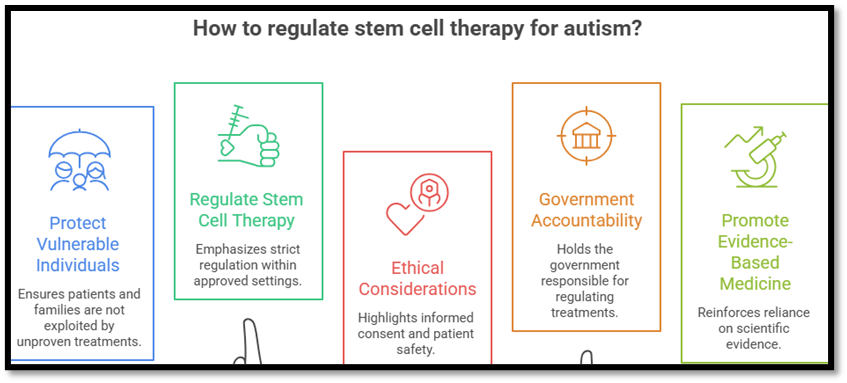
The Supreme Court’s ruling on stem cell therapy for ASD is a significant step towards protecting vulnerable individuals and promoting ethical and evidence-based medical practices in India. The ruling emphasizes the need for strict regulation of stem cell therapy and highlights the importance of informed consent and government accountability.
Source: (The Hindu)
La Excellence IAS Academy, the best IAS coaching in Hyderabad, known for delivering quality content and conceptual clarity for UPSC 2026 preparation.
FOLLOW US ON:
◉ YouTube : https://www.youtube.com/@CivilsPrepTeam
◉ Facebook: https://www.facebook.com/LaExcellenceIAS
◉ Instagram: https://www.instagram.com/laexcellenceiasacademy/
GET IN TOUCH:
Contact us at info@laex.in, https://laex.in/contact-us/
or Call us @ +91 9052 29 2929, +91 9052 99 2929, +91 9154 24 2140
OUR BRANCHES:
Head Office: H No: 1-10-225A, Beside AEVA Fertility Center, Ashok Nagar Extension, VV Giri Nagar, Ashok Nagar, Hyderabad, 500020
Madhapur: Flat no: 301, survey no 58-60, Guttala begumpet Madhapur metro pillar: 1524, Rangareddy Hyderabad, Telangana 500081
Bangalore: Plot No: 99, 2nd floor, 80 Feet Road, Beside Poorvika Mobiles, Chandra Layout, Attiguppe, Near Vijaya Nagara, Bengaluru, 560040