
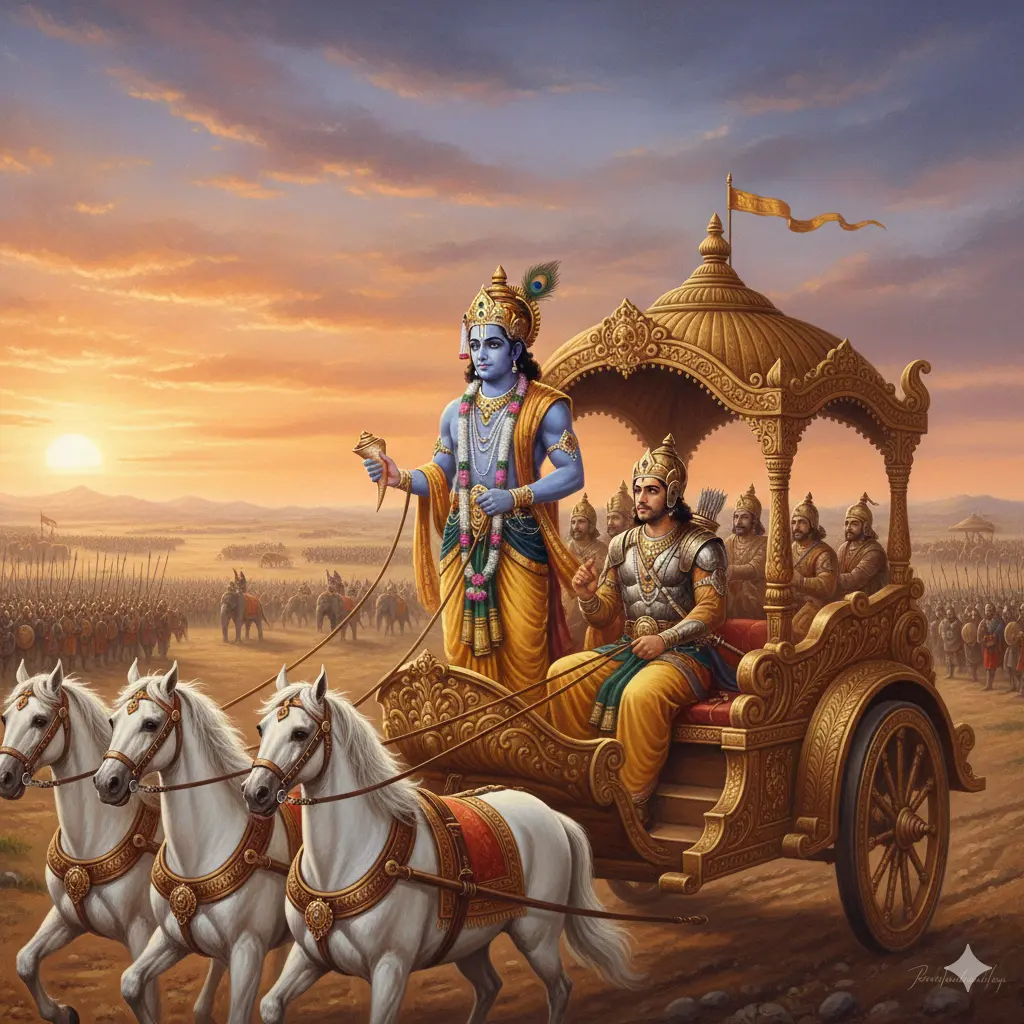
Mythology is often treated as a set of old stories—tales that belong to another time and have little to do with modern administration or public life. But if you look deeper, mythology captures something far more enduring. It preserves the moral imagination of an entire civilization. It reflects how societies have understood duty, power, justice, courage, compassion, ambition, and failure.
For anyone preparing for the UPSC exam, mythology becomes a surprisingly powerful resource. The Essay and Ethics papers—unlike the other General Studies papers—are not tests of information alone. They judge your ability to reflect, to reason with maturity, and to understand the human side of governance. Mythology, with its rich narratives and timeless dilemmas, naturally supports this kind of thinking.
This essay explores how mythology can meaningfully enrich UPSC Essay and Ethics answers, and why it offers something far more valuable than just “stories.”
1. Mythology as a Civilizational Lens
The Civil Services examination expects aspirants to have a feel for India’s civilizational journey and cultural inheritance. Much of India’s collective thinking—about right and wrong, family roles, leadership, fairness, and moral responsibility—comes from epics, folklore, and classical traditions.
A civil servant cannot function in isolation. He or she has to understand the ethical vocabulary of the common citizen. Whether one looks at public expectations, social norms, festivals, community behaviour, or debates on morality, mythology shapes the background assumptions that people carry.
Knowing mythology, therefore, gives you:
- a deeper sense of India’s moral universe
- a better understanding of societal behaviour
- a natural way to connect abstract ideas with lived culture
UPSC wants sensitivity and cultural literacy. Mythology offers both.
2. Mythology and the Essay Paper
Philosophical essays in UPSC often explore themes like leadership, discipline, harmony, responsibility, greed, justice, the meaning of freedom, and the nature of human character. Mythological stories intersect with all of these.
a) Stories make abstract ideas easier to grasp
Instead of giving dry arguments, a short reference to a mythological moment can illuminate an entire idea.
For example:
In an essay on self-discipline, Arjuna learning to focus only on the eye of the bird immediately conveys the power of single-pointed concentration. The example is short, but it captures a complex idea with simplicity.
b) Mythology helps you build a natural narrative
A well-written essay flows like a story—introduction, dilemma, reflection, resolution.
Mythological narratives already contain this structure. The story of Nachiketa and Yama, for instance, fits beautifully into essays on truth-seeking, courage, or inner clarity. It contains curiosity, conflict, and resolution—everything an essay needs.
c) It allows you to bring in a global dimension
UPSC appreciates essays that move beyond the Indian context. World mythology is full of ideas:
- Prometheus represents the fire of human innovation.
- Sisyphus symbolizes the tragedy of blind hard work without reflection.
- The Phoenix captures resilience and renewal.
When you place an Indian myth and a global myth side by side, the essay immediately gains depth and a broader intellectual feel.
d) Mythology introduces gentle philosophy without sounding preachy
Instead of quoting philosophers repeatedly, a subtle mythological reference gives the essay a reflective tone. It invites the examiner into a more thoughtful space.
3. Mythology in Ethics (GS-IV)
Ethics demands more than rule-based thinking. It tests whether you can understand emotions, motives, dilemmas, and the psychology behind human decisions. Mythology is rich in all of these.
a) It provides clear illustrations of values
Some stories communicate ethical values more crisply than any textbook:
- Harishchandra → integrity in its purest form
- Rama → duty performed despite personal cost
- Karna → generosity even in adversity
- Hanuman → humility that coexists with extraordinary capability
- Yudhishthira → fairness and moral restraint
Such examples don’t need long explanations. They are widely understood and culturally neutral when used briefly and thoughtfully.
b) Mythology mirrors ethical theories
Many Western ethical theories find parallels in Indian mythology:
- Rama’s unwavering sense of duty resembles deontological ethics.
- Krishna encouraging Arjuna to fight for the larger good echoes utilitarian logic.
- The Upanishadic virtues align closely with Aristotle’s virtue ethics.
- Stories surrounding Kunti, Gandhari, or Sita reflect the ethics of care.
Using these connections allows you to move smoothly between theory and application.
c) Mythology enriches case study responses
Case studies often revolve around conflicting loyalties, emotional pressure, ethical courage, or institutional responsibility. A simple analogy can strengthen your reasoning:
A civil servant torn between fairness and loyalty resembles Arjuna’s moment of hesitation—where personal relationships collide with duty.
A situation requiring impartial justice reflects the moral stance Yudhishthira consistently tried to uphold.
Such comparisons are brief but powerful.
4. Administrative Lessons Hidden in Mythology
Beyond morality and philosophy, mythology also offers insights into leadership, decision-making, communication, and conflict management—skills essential for a future civil servant.
a) Models of leadership
Different mythological figures embody different leadership styles:
- Krishna → strategic, persuasive, emotionally intelligent
- Rama → calm, principled, dignified
- Hanuman → devoted, mission-oriented, action-driven
- Vidura → wise, balanced, articulate
- Buddha and Mahavira → leaders who governed through compassion and moral authority
These examples fit naturally into Ethics answers involving leadership, conflict resolution, or public service values.
b) Understanding conflicts
Almost every mythological narrative deals with conflicts—internal or external. They show:
- why conflicts arise
- how emotions influence decisions
- what happens when leaders avoid tough choices
- how dialogue, persuasion, and patience can prevent escalation
These insights help you write stronger answers for applied ethics and interpersonal ethics.
c) Lessons on justice and public duty
Texts like the Jataka tales, Vidura Neeti, and Thirukkural offer clear observations on:
- the qualities of a just ruler
- handling public resources
- fairness in decision-making
- the importance of restraint and humility
These ideas can be woven into answers without quoting the texts at length.
5. Mythology and Emotional Intelligence
Ethics is ultimately about understanding people. Mythology portrays the full palette of human emotions:
- Duryodhana’s jealousy
- Kaikeyi’s insecurity
- Dhritarashtra’s blind attachment
- Ravana’s ego
- Karna’s longing for acceptance
- Yudhishthira’s guilt
- Draupadi’s resilience
When you understand these emotional patterns, you can explain ethical dilemmas more convincingly. Your answers begin to sound more human and less formulaic.
6. How to Use Mythology Without Overdoing It
The most common worry aspirants have is: Will referencing mythology make my answer sound religious or biased?
Not if you use it correctly.
The key is restraint.
Best practices:
- Mention mythology briefly, almost like a metaphor.
- Avoid pushing a religious interpretation.
- Focus only on the ethical or philosophical message.
- Keep the language neutral and inclusive.
- Make sure the story directly supports the point you are making.
A one-line reference is often enough.
Example:
“Bhagiratha’s long penance reminds us that meaningful change requires sustained effort, not sudden action.”
Neutral, simple, and insightful.
7. The Power of Comparative Mythology
If you want your essay or ethics answer to stand out, occasionally pairing an Indian myth with a global myth works beautifully:
- Bhagiratha and Prometheus → both bring something transformative to mankind
- Phoenix and Jatayu → courage, sacrifice, and renewal
- Midas and King Trishanku → the dangers of boundless desire
These comparisons show that you are not quoting mythology out of habit, but using it to think across cultures.
8. Mistakes to Avoid
To keep your writing mature, avoid:
- narrating entire stories
- using obscure or controversial myths
- making religious claims
- using mythology to justify unethical behaviour
- relying on mythology too often in a single answer
Think of mythology as a spice, not the main dish.
9. A Sample Use in Essay
Topic: “Character is destiny.”
A human-style reference may look like this:
“Across mythologies, destiny is portrayed not as an external force but as the outcome of one’s choices. Rama’s commitment to dharma shaped his legacy, just as Nachiketa’s clarity of purpose transformed a curious child into a symbol of wisdom. These stories remind us that what ultimately shapes a life is not circumstance but character.”
Short, philosophical, and rooted.
10. A Sample Use in Ethics Case Study
Situation: You are expected to bend rules under political pressure.
“Situations like this echo the moral clarity Yudhishthira displayed—where justice could not be influenced by personal ties or pressure. An ethical public servant must uphold fairness even when the consequences are uncomfortable.”
Concise and effective.
Conclusion
Mythology is not about gods performing miracles; it is about human beings wrestling with desires, duties, ambitions, weaknesses, and ideals. In a competitive exam that tests how deeply you can think, mythology offers:
- moral vocabulary
- narrative richness
- emotional resonance
- cultural grounding
- intellectual depth
When used thoughtfully, it can lift an Essay from merely “correct” to genuinely reflective, and turn an Ethics answer from mechanical to insightful.
Mythology does not simply give you content.
It gives you perspective—and in UPSC, perspective often makes the difference.
For more such preparation strategies, you can read here: https://laex.in/category/preparation-strategy/
La Excellence IAS Academy, the best IAS coaching in Hyderabad, known for delivering quality content and conceptual clarity for UPSC 2025 preparation.
FOLLOW US ON:
◉ Youtube : https://www.youtube.com/@CivilsPrepTeam
◉ Facebook: https://www.facebook.com/LaExcellenceIAS
◉ Instagram: https://www.instagram.com/laexcellenceiasacademy/
GET IN TOUCH:
Contact us at info@laex.in, https://laex.in/contact-us/
or Call us @ +91 9052 29 2929, +91 9052 99 2929, +91 9154 24 2140
OUR BRANCHES:
Head Office: H No: 1-10-225A, Beside AEVA Fertility Center, Ashok Nagar Extension, VV Giri Nagar, Ashok Nagar, Hyderabad, 500020
Madhapur: Flat no: 301, survey no 58-60, Guttala begumpet Madhapur metro pillar : 1524, Rangareddy Hyderabad, Telangana 500081
Bangalore: Plot No: 99, 2nd floor, 80 Feet Road, Beside Poorvika Mobiles, Chandra Layout, Attiguppe, Near Vijaya Nagara, Bengaluru, 560040