
Context
A recent study published in Nature Food has identified India’s irrigated paddy fields among the world’s largest sources of methane (CH₄) emissions. The study highlights that continuous flooding, residue incorporation and increased nitrogen fertilizer use have significantly increased greenhouse gas emissions from rice cultivation.
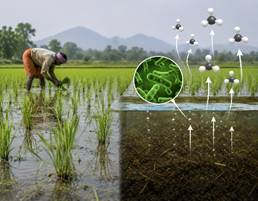
Explanation:
- Methane (CH₄) is a potent greenhouse gas (GHG) with a much higher Global Warming Potential (GWP) than carbon dioxide over a 20-year period.
- In flooded paddy fields, oxygen-deficient (anaerobic) conditions promote methanogenic archaea, which decompose organic matter and release methane.
- Continuous irrigation, incorporation of crop residues, and excessive nitrogen fertilizer application further enhance methane emissions from rice cultivation.
- Mitigation measures include Alternate Wetting and Drying (AWD), improved water management, residue management, optimized fertilizer use and cultivation of low-emission rice varieties.
La Excellence IAS Academy, the best IAS coaching in Hyderabad, known for delivering quality content and conceptual clarity for UPSC 2026 preparation.
FOLLOW US ON:
◉ YouTube : https://www.youtube.com/@CivilsPrepTeam
◉ Facebook: https://www.facebook.com/LaExcellenceIAS
◉ Instagram: https://www.instagram.com/laexcellenceiasacademy/
GET IN TOUCH:
Contact us at info@laex.in, https://laex.in/contact-us/
or Call us @ +91 9052 29 2929, +91 9052 99 2929, +91 9154 24 2140
OUR BRANCHES:
Head Office: H No: 1-10-225A, Beside AEVA Fertility Center, Ashok Nagar Extension, VV Giri Nagar, Ashok Nagar, Hyderabad, 500020
Madhapur: Flat no: 301, survey no 58-60, Guttala begumpet Madhapur metro pillar: 1524, Rangareddy Hyderabad, Telangana 500081
Bangalore: Plot No: 99, 2nd floor, 80 Feet Road, Beside Poorvika Mobiles, Chandra Layout, Attiguppe, Near Vijaya Nagara, Bengaluru, 560040