
Paper: GS-II | Subject: Social Justice | Topic: Health | Issue: Interconnected Global Health Threats and Public Health Governance
Context
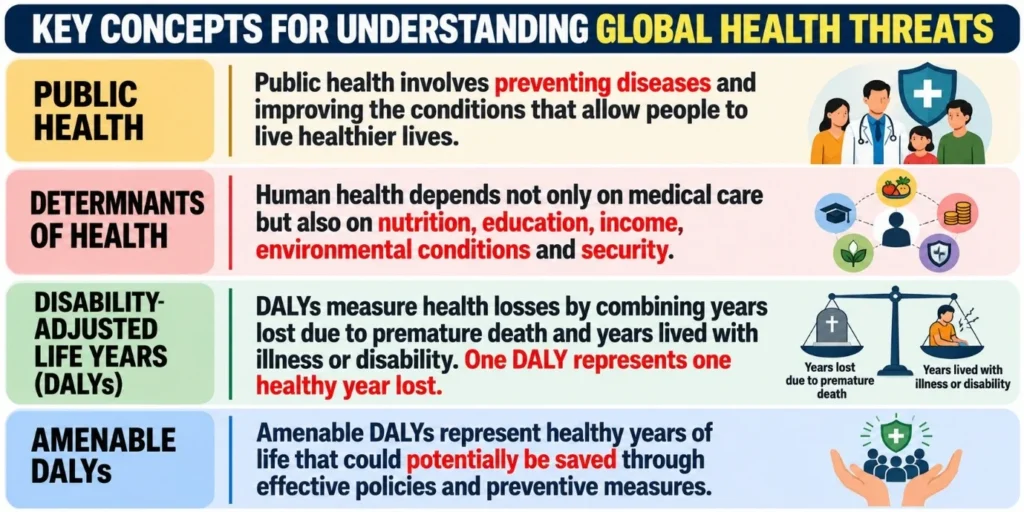
Recently, a Lancet Commission report, released at the World Health Summit in Berlin, identified 17 interconnected threats to global health. It urged governments to address these threats collectively rather than treating them as separate health, environmental and security problems.
Explanation
Major Findings of the Lancet Commission
- The Commission examined health risks across 204 countries and territories and identified 17 threats capable of causing catastrophic health losses by 2100.
- These include climate change, air pollution, antimicrobial resistance, pandemics, childhood malnutrition, obesity, mental health problems, income inequality, armed conflicts and malicious use of artificial intelligence.
- A threat was classified as catastrophic if it could cause at least one billion DALYs. Even relatively unlikely events, such as nuclear conflict, require attention because of their potentially devastating consequences.
Why Health Threats Must Be Addressed Together
- Interconnected risks: Climate change can damage crops, increase food prices and worsen malnutrition, making vulnerable populations more susceptible to diseases.
- Compounding effects: Armed conflicts destroy healthcare infrastructure, displace populations and disrupt sanitation, increasing the spread of infectious diseases.
- Social inequalities: Poverty and limited education reduce access to nutritious food and healthcare, increasing vulnerability to other health threats.
- Thus, addressing individual diseases without tackling their underlying environmental, economic and social causes cannot ensure lasting improvements in public health.
Key Implications for Public Health Policies
- Preventive healthcare: Addressing obesity, poor diets and physical inactivity could prevent approximately 23.1 billion DALYs, according to the Commission’s estimates.
- Education: Improving educational access could avert approximately 16.1 billion DALYs by improving health awareness, economic opportunities and living conditions.
- Different national priorities: Wealthier countries face greater challenges from obesity and ageing, while poorer countries remain particularly vulnerable to malnutrition and reduced international health assistance.
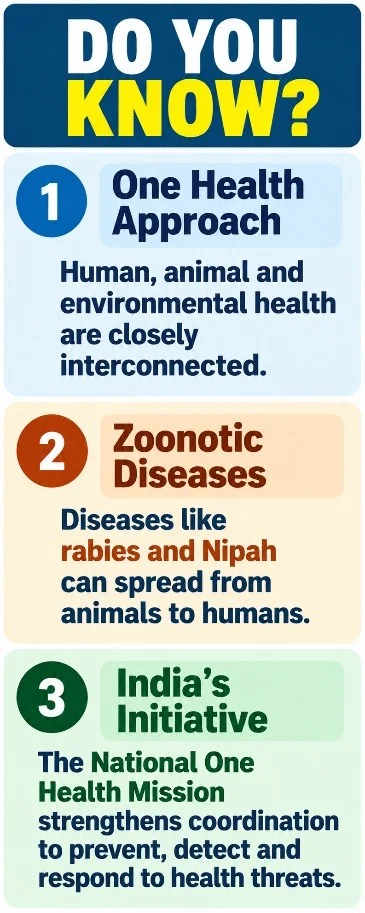
- Integrated governance: Governments must coordinate healthcare with education, agriculture, environmental protection and social welfare through a Health in All Policies approach.
- India must address air pollution, malnutrition, lifestyle diseases and climate-related health risks through coordinated policies rather than isolated interventions.
Conclusion
The report highlights that human health cannot be protected through medical interventions alone. Effective public health governance requires addressing interconnected social, economic, environmental and security challenges through prevention, coordinated policies and international cooperation.
Source: (The Hindu)
La Excellence IAS Academy, the best IAS coaching in Hyderabad, known for delivering quality content and conceptual clarity for UPSC 2026 preparation.
FOLLOW US ON:
◉ YouTube: https://www.youtube.com/@CivilsPrepTeam
◉ Facebook: https://www.facebook.com/LaExcellenceIAS
◉ Instagram: https://www.instagram.com/laexcellenceiasacademy/
GET IN TOUCH:
Contact us at info@laex.in, https://laex.in/contact-us/
or Call us @ +91 9052 29 2929, +91 9052 99 2929, +91 9154 24 2140
OUR BRANCHES:
Head Office: H No: 1-10-225A, Beside AEVA Fertility Center, Ashok Nagar Extension, VV Giri Nagar, Ashok Nagar, Hyderabad, 500020
Madhapur: Flat no: 301, survey no 58-60, Guttala begumpet Madhapur metro pillar: 1524, Rangareddy Hyderabad, Telangana 500081
Bangalore: Plot No: 99, 2nd floor, 80 Feet Road, Beside Poorvika Mobiles, Chandra Layout, Attiguppe, Near Vijaya Nagara, Bengaluru, 560040