
Paper: GS-II, Subject: Polity & Governance, Topic: Transparency and Accountability, Issue: RTI Implementation and Dilution
Context
A recent study highlighted poor compliance with mandatory disclosures under the RTI Act 2005. In 2024–25, only 62.7% of 2,303 public authorities submitted transparency audit reports, while only 33 of 94 examined Union government departments displayed updated reports.
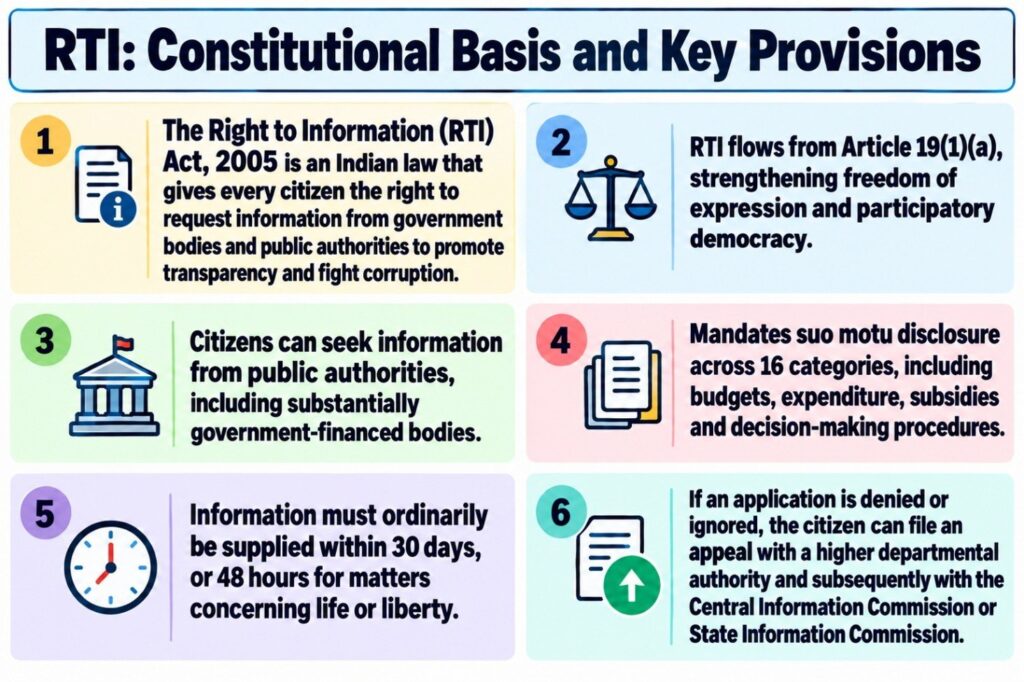
Significance
RTI has empowered citizens to scrutinise welfare delivery, public expenditure, recruitment and corruption, strengthening transparency, accountability and participatory governance.
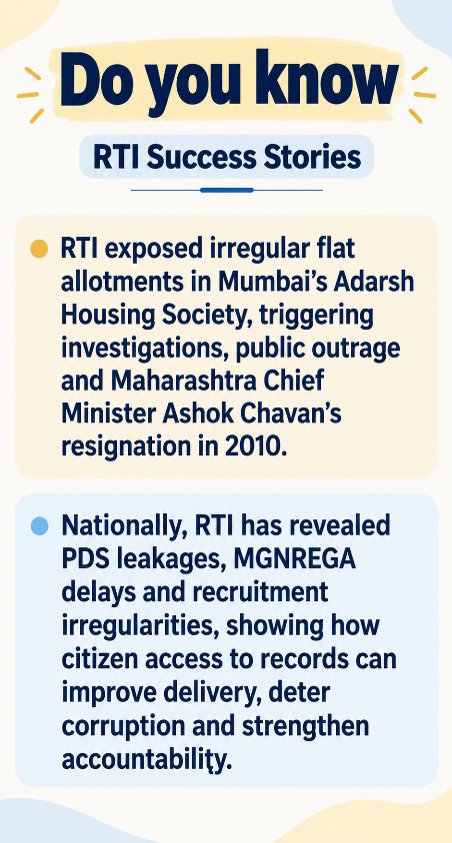
Major Implementation Gaps and Criticisms
- Weak Proactive Disclosure: Outdated websites and incomplete audit reports compel citizens to seek information already legally due.
- Mounting Pendency: Over 4 lakh appeals and complaints remained pending before Information Commissions nationwide in June 2025.
- Institutional Vacancies: Six Information Commissions became temporarily defunct between July 2024 and October 2025, undermining timely appeals.
- Weak Enforcement: Inadequate penalties, bureaucratic secrecy and threats against RTI activists weaken accountability.
- 2019 Amendment — Criticised Dilution: The RTI (Amendment) Act, 2019 empowered the Central Government to prescribe Information Commissioners’ tenure, salaries and service conditions, raising concerns about institutional independence.
- DPDP Act — Further Dilution Concerns: The Digital Personal Data Protection Act, 2023, amended Section 8(1)(j) of the RTI Act, broadening the exemption for personal information. Critics fear reduced public scrutiny, although Section 8(2)’s public-interest override remains.
- Other Barriers: Poor record management, digital exclusion and limited public awareness restrict accessibility.
Way Forward
- Proactive Transparency: Ensure regularly updated Section 4 disclosures and independent transparency audits.
- Institutional Strengthening: Fill vacancies, reduce pendency and safeguard Information Commissions’ independence.
- Effective Enforcement: Strengthen penalties, protect RTI activists and modernise records management.
- Legal Safeguards: Balance individual privacy with public-interest disclosure and democratic accountability.
Conclusion
RTI must evolve from reactive disclosure to transparency by default. Its effectiveness depends on independent institutions, administrative accountability and meaningful citizen access.
Source: (The Indian Express, The Hindu)
La Excellence IAS Academy, the best IAS coaching in Hyderabad, known for delivering quality content and conceptual clarity for UPSC 2026 preparation.
FOLLOW US ON:
◉ YouTube : https://www.youtube.com/@CivilsPrepTeam
◉ Facebook: https://www.facebook.com/LaExcellenceIAS
◉ Instagram: https://www.instagram.com/laexcellenceiasacademy/
GET IN TOUCH:
Contact us at info@laex.in, https://laex.in/contact-us/
or Call us @ +91 9052 29 2929, +91 9052 99 2929, +91 9154 24 2140
OUR BRANCHES:
Head Office: H No: 1-10-225A, Beside AEVA Fertility Center, Ashok Nagar Extension, VV Giri Nagar, Ashok Nagar, Hyderabad, 500020
Madhapur: Flat no: 301, survey no 58-60, Guttala begumpet Madhapur metro pillar: 1524, Rangareddy Hyderabad, Telangana 500081
Bangalore: Plot No: 99, 2nd floor, 80 Feet Road, Beside Poorvika Mobiles, Chandra Layout, Attiguppe, Near Vijaya Nagara, Bengaluru, 560040