
-BY GEET AGARWAL, AANIKA GOWDA
1. Introduction – When Public Service Becomes Personal
When we hear the words Indian Administrative Service, we often imagine government offices, official files, meetings, and important decisions. But sometimes, an IAS officer’s work goes far beyond an office table. Sometimes, public service means walking through difficult terrain, listening to people who have been ignored for years, finding a solution when there seems to be none, and convincing ordinary people that change is actually possible.
The story of Armstrong Pame is one such story.
Armstrong Pame is an Indian Administrative Service officer from Manipur who became widely known as the “Miracle Man of Manipur” after helping build a road connecting remote areas of Manipur with Nagaland and Assam. What makes his story unusual is not simply the length of the road. It is the way the idea began—with ordinary villagers, social media, personal determination, and a strong belief that development should reach people who are often far away from the centres of power.
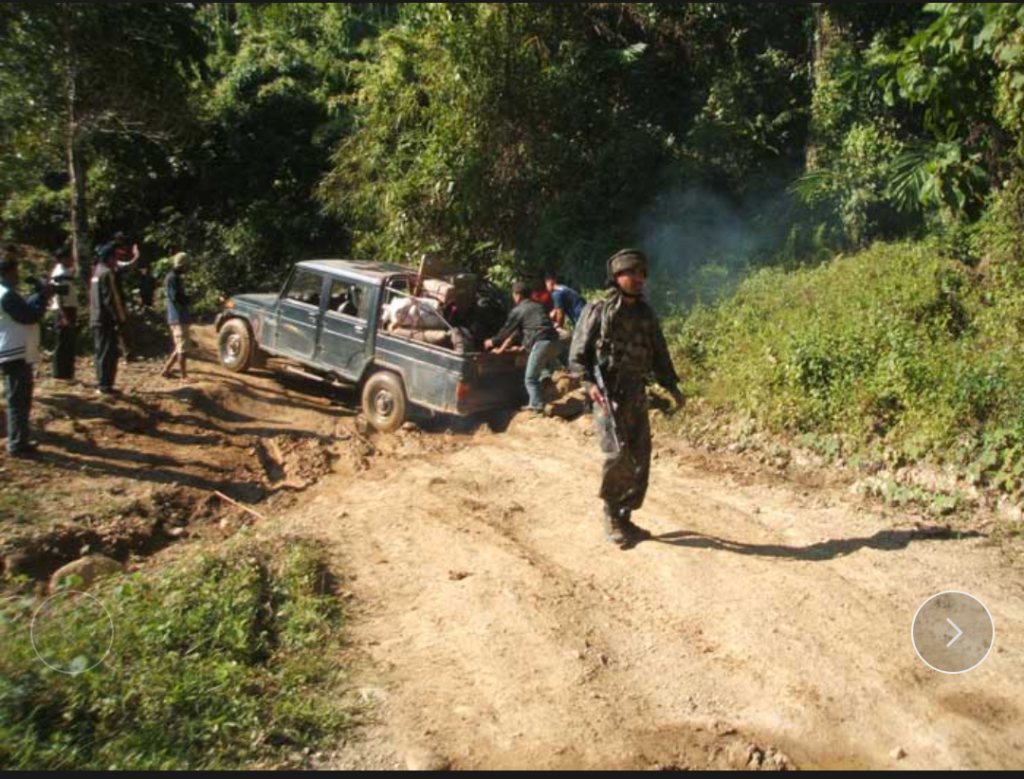
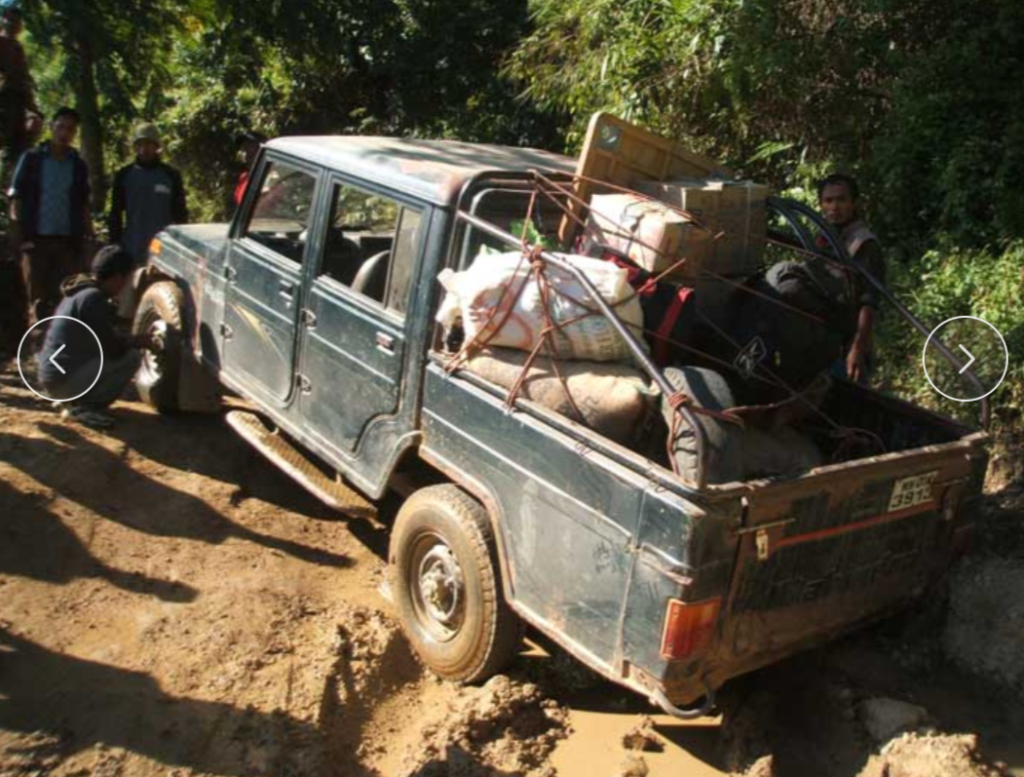
Armstrong Pame’s journey is especially inspiring because he himself came from a remote area. He had experienced the difficulties of poor connectivity while growing up. Therefore, when he later became an officer and saw villagers carrying heavy loads, patients being transported on makeshift stretchers, and children struggling because of poor infrastructure, these were not just statistics to him. They reminded him of the place from which he had come.
His life teaches us that administration is not only about enforcing rules. At its best, it is about understanding people.
2. The Beginning – A Childhood Far Away from the Spotlight
Armstrong Pame was born on23 September 1984 in Impa village in the Tousem subdivision of Tamenglong district, Manipur. His childhood was spent in a region where basic infrastructure was limited.
His village was not the kind of place where opportunities came easily. Even reaching important places could involve long journeys. Roads and electricity were major challenges, and people depended heavily on their own strength and determination to meet everyday needs.
This background is important when understanding Armstrong’s later achievements.
Armstrong Pame did not grow up seeing development as something guaranteed. He saw how difficult life could become when a village was disconnected from the rest of the world.
According to an account written by his former school principal, Armstrong was admitted to school at around nine years of age. Even as a student, he was known for being hardworking and academically strong. He reportedly topped his class in one of his early examinations, scoring more than 90 percent.
Something is interesting about his childhood story: he did not simply study to get marks. Education gradually became his way of breaking through the limitations around him.
His family was not wealthy. His father was a schoolteacher, and the family’s financial circumstances were modest. His teachers remembered him as a disciplined and determined student who understood the importance of education.
In many ways, the difficulties of his childhood became part of his strength.
3. Education – From a Remote Village to St. Stephen’s College
Armstrong’s educational journey took him far beyond his village.
He studied in Manipur and later attended St. Edmund’s College in Shillongfor his higher secondary education. He then moved to Delhi and joined St. Stephen’s College, one of the country’s well-known institutions, where he studied Physics and graduated in 2005.
His time at St. Stephen’s was not limited to academics.
According to his former principal, Armstrong was an excellent debater and participated in competitions at university and national levels. He reportedly received numerous certificates for debating and even used prize money from competitions to support himself during his college years.
This detail makes his college journey particularly interesting.
Armstrong Pame was not simply a student sitting in a classroom and preparing for examinations. He was developing communication skills, confidence, and the ability to express an argument—qualities that would later become extremely useful in public administration.
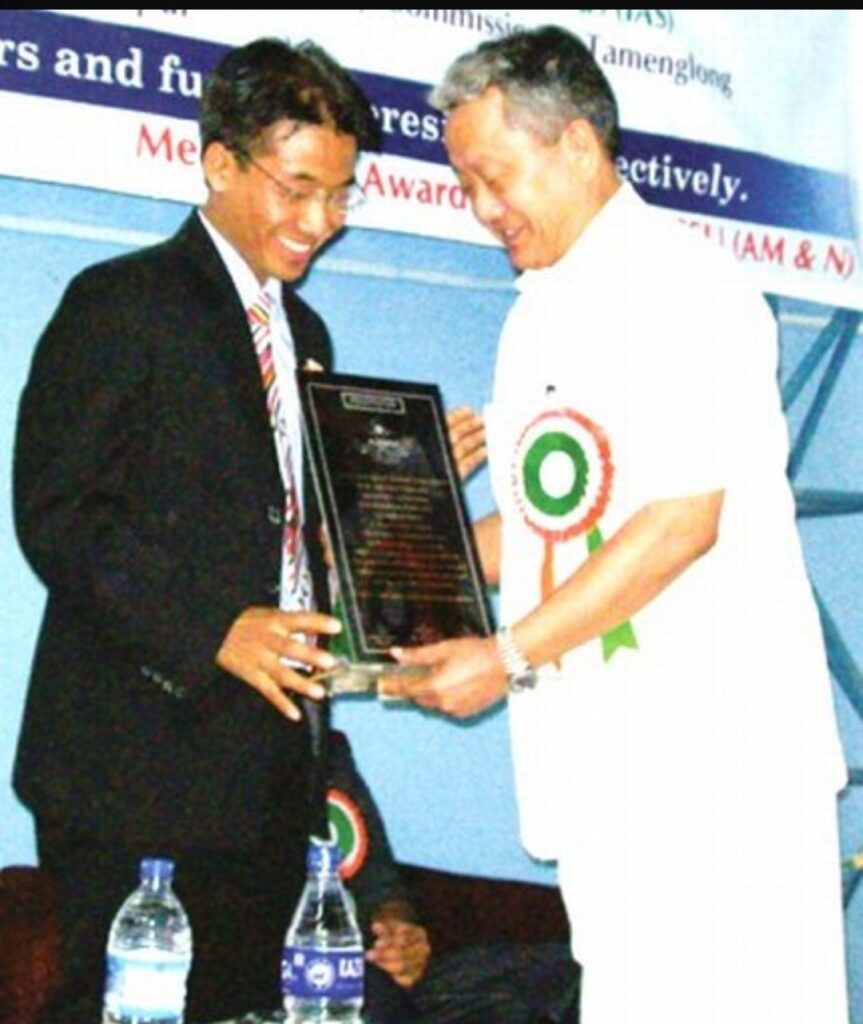
His academic achievements were also significant. He was recognised as one of the best students of his college and received a certificate for his participation in college activities.
There was another opportunity before him as well. He reportedly secured a high rank in an IIT entrance examination in 2005. However, he continued with his degree and completed his studies at St. Stephen’s.
His educational journey therefore shows something important: success does not always follow one straight road.
Sometimes, a person has several possible paths. What matters is choosing the path that fits one’s purpose.
4. The Dream of Becoming an Officer
For Armstrong Pame, becoming a civil servant was not simply about obtaining a prestigious job.
His experiences had already made him aware of the problems faced by people living in remote parts of the country.
After completing his graduation, he decided to attempt the Civil Services Examination.
His first attempt led to his selection for theIndian Revenue Service (IRS) in the Customs and Central Excise department. However, he continued to pursue his goal of joining the IAS.
Armstrong Pame succeeded in the Civil Services Examination in his subsequent attempt and was selected for the Indian Administrative Service. He became part of the 2009 batch.
At just 24 years of age, he had achieved a dream that had required years of education and preparation.
But the real test of his dream was still ahead.
Passing the examination was an achievement.
Serving the people was the responsibility.

5. Entering Manipur as an Officer
When Armstrong Pame began working as an IAS officer in Manipur, he had an advantage that many administrators may not have: he understood the region personally.
He knew the geography.
He understood the difficulties of travelling through the hills.
Most importantly, he understood the people.
As an officer in the Tousem area, he travelled through villages and witnessed the difficulties faced by residents. Reports from that period describe how people had to walk for hours to reach places that were geographically not very far away.
The absence of proper roads affected almost every part of life.
It affected:
- Education
- Healthcare
- Transportation
- Agriculture
- Employment
- Trade
- Emergency services
- Communication with neighbouring areas
A road might sound like a simple piece of infrastructure when viewed from a city.
But in a remote village, a road can mean the difference between reaching a hospital and not reaching one.
It can mean a child being able to attend school regularly.
It can mean farmers taking their products to a market.
It can mean a family no longer being completely cut off from the outside world.
That is what Armstrong began to understand more deeply during his service.
6. The Moment That Changed Everything
One of the most important parts of Armstrong Pame’s story was not a government meeting.
It was his interaction with villagers.
When he asked people what they wanted, the answer was surprisingly simple.
They wanted a road.
Not a luxury project.
Not a grand building.
Just a road.
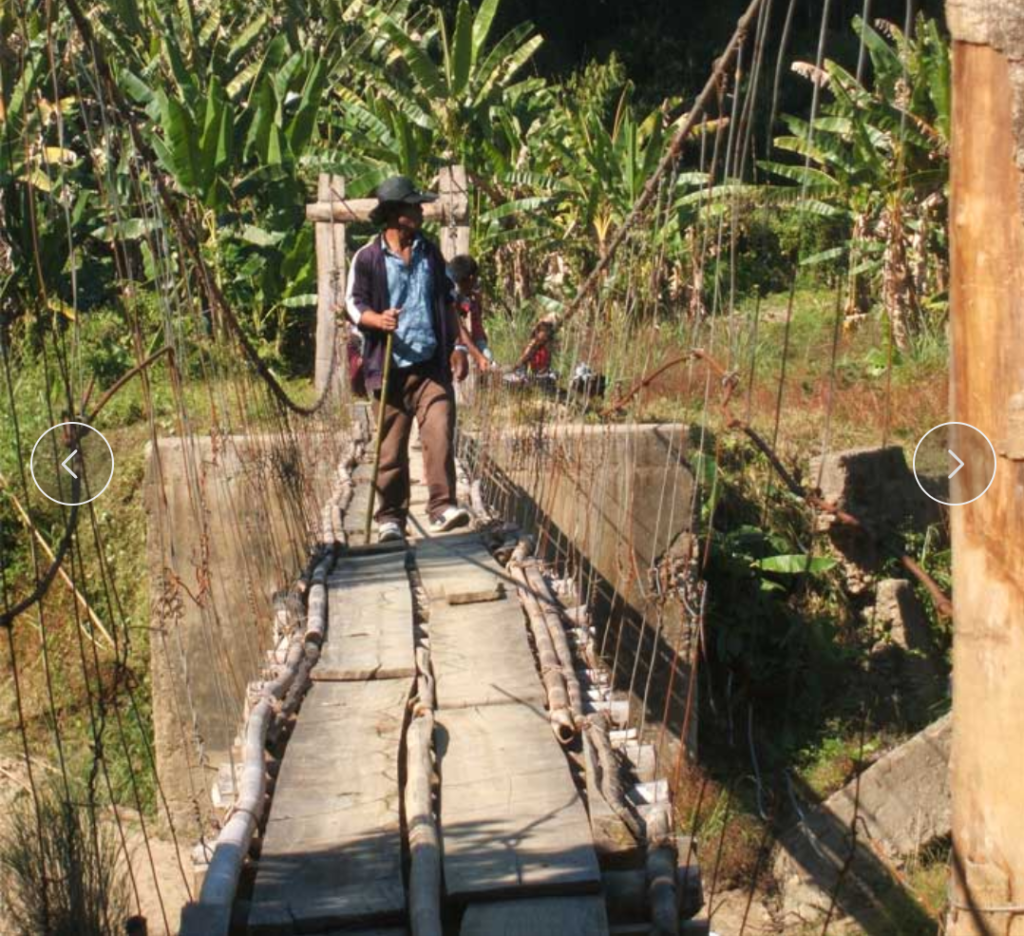
Reports described villagers carrying rice and other necessities on their backs because proper motorable roads were unavailable. Patients sometimes had to be carried on makeshift bamboo stretchers.
For Armstrong, this was not merely an infrastructure problem.
It was a human problem.
He had grown up in a similar environment. He knew what isolation felt like.
The question was no longer:
“Can something be done?”
The question became:
“What can I do?”
That change in attitude became the beginning of the People’s Road.
#Armstrong Pame. #Armstrong Pame #Armstrong Pame #Armstrong Pame
7. The People’s Road – An Idea Bigger Than a Road
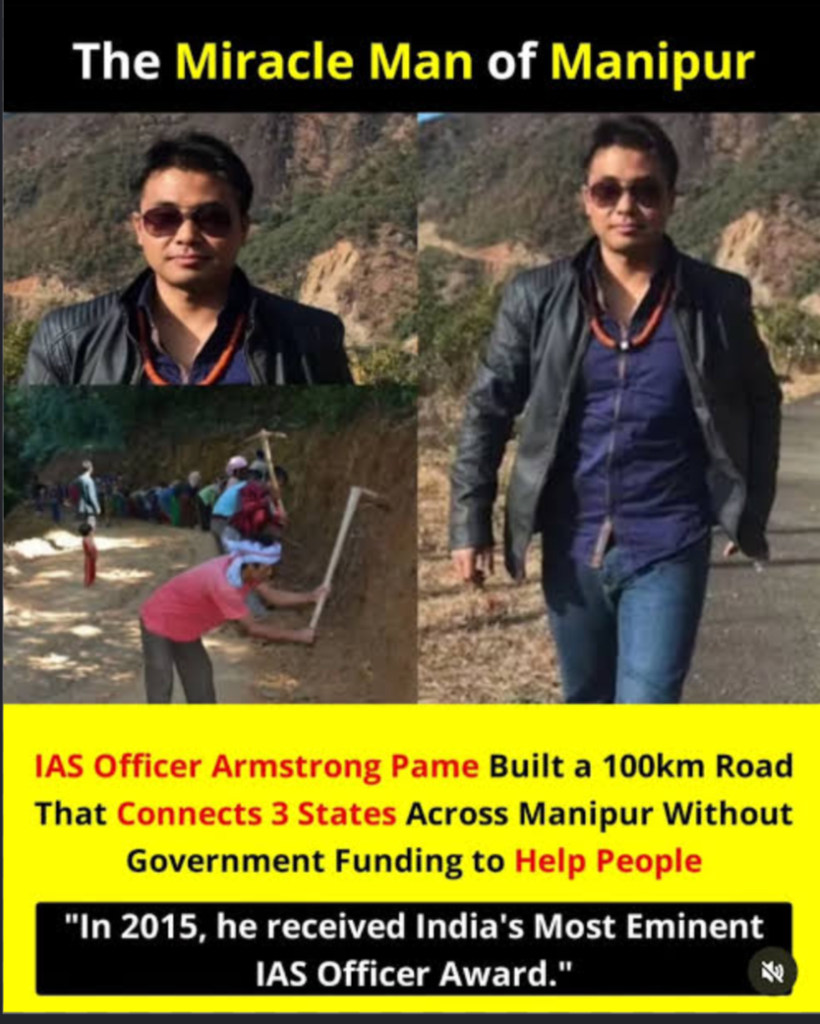
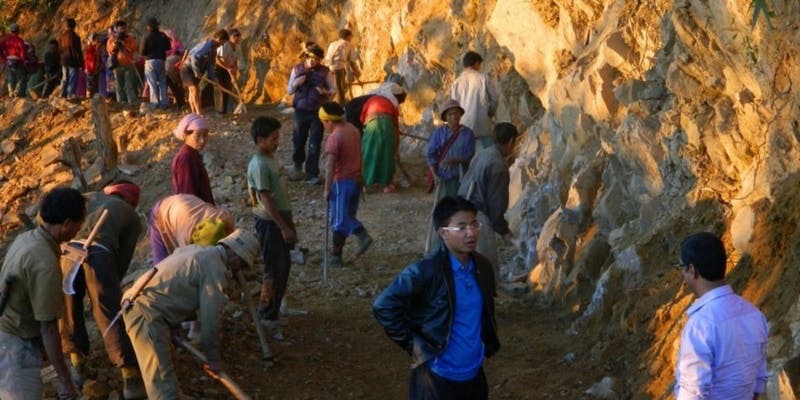
In 2012, Armstrong Pame began working toward the construction of a road connecting remote parts of Manipur with neighbouring areas of Nagaland and Assam.
The proposed road was around 100 kilometres long and later became popularly known as the People’s Road.
The challenge was enormous.
The area was hilly.
The terrain was difficult.
Government funding was not immediately available for the project.
And Armstrong was not a construction company.
He was a young civil servant.
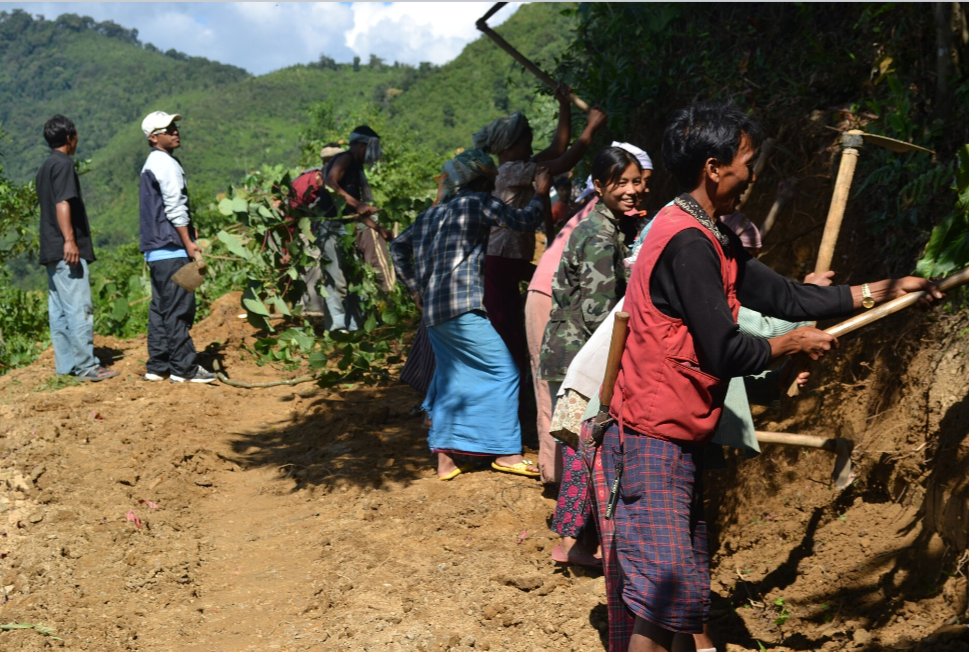
Instead of giving up, he decided to involve the people themselves.
8. When Government Support Was Not Enough
One of the most striking aspects of the story is that the road was not created simply by waiting for a government project to move forward.
Armstrong reached out to people through social media and other networks.
He asked for support.
People responded.
Contributions began coming in.
Villagers participated in the work.
Friends and well-wishers contributed money.
The road became a community project rather than simply an official project.
Different reports give slightly different figures for the amount raised, but contemporary accounts commonly reported contributions running into tens of lakhs, including a significant personal contribution from Armstrong himself.
This is what makes the story special.
The road was not just constructed with money.
It was constructed with trust.
9. The Real Challenges Behind the Road
It would be easy to look at the finished story and say:
“An IAS officer built a road.”
But that sentence hides the difficult part.
The real challenge was getting people to believe that the road could actually happen.
For years, the region had experienced the frustration of inadequate connectivity.
There had been discussions and plans before, but projects had not always translated into roads on the ground. One contemporary report noted that the road had been a long-standing dream of the local population and that an earlier government-backed effort had failed to materialise.
Armstrong therefore had to deal with more than rocks and hills.
Armstrong Pame had to deal with disappointment.
He had to mobilise people.
He had to coordinate different groups.
He had to raise resources.
He had to convince people that their contribution mattered.
And he had to keep going even when the easier option would have been to wait.
#Armstrong Pame #Armstrong Pame #Armstrong Pame #Armstrong Pame
10. A Road Built on Community Strength
The People’s Road became an example of what can happen when administration and community participation come together.
Villagers did not remain passive beneficiaries.
They became participants.
This is perhaps the most meaningful aspect of the entire project.
Development is often discussed in terms of budgets, tenders, projects and government schemes. Armstrong Pame’s story added another important element:
people themselves.
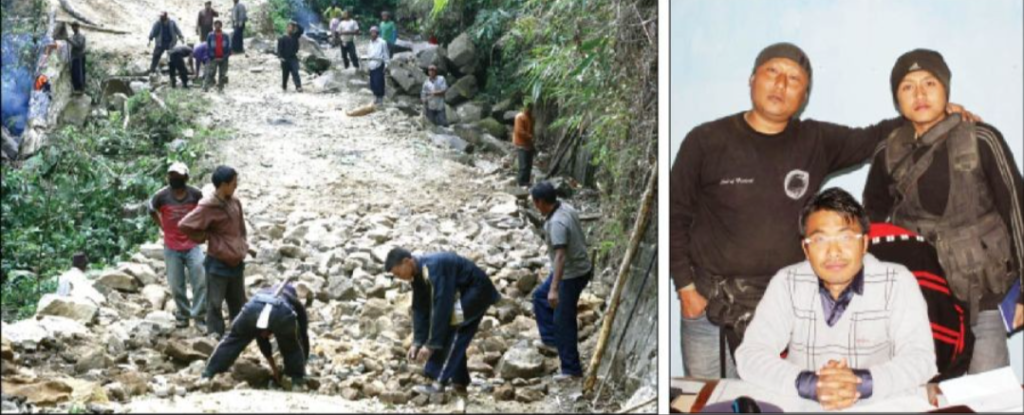
The villagers were not simply waiting for someone to rescue them.
They were ready to work for their own future when someone gave them direction and encouragement.
The road therefore became a symbol of collective effort.
It connected places physically, but it also connected people emotionally to the idea that their problems mattered.
11. Why the Road Mattered So Much
The importance of the road cannot be measured only in kilometres.
Its importance can be understood in terms of the lives it could affect.
A better road can make it easier for a student to reach school.
It can help a pregnant woman or a sick person reach medical care faster.
It can allow farmers to transport agricultural products.
It can help traders.
It can create better communication between villages.
It can reduce isolation.
It can connect people to opportunities.
This is why infrastructure is more than concrete, stone and soil.
Infrastructure becomes meaningful when it changes human lives.
The People’s Road was therefore not simply a construction project.
It represented access.
#Armstrong Pame #Armstrong Pame #Armstrong Pame #Armstrong Pame
12. The “Miracle Man” of Manipur
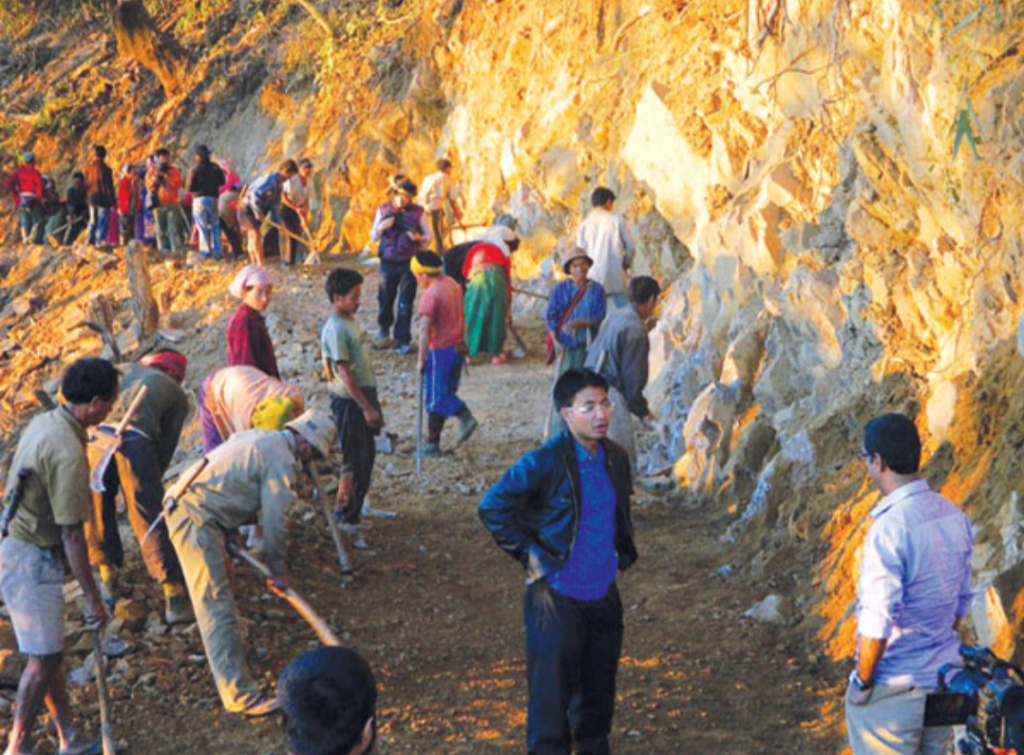
As news of the project spread, Armstrong Pame became known as the “Miracle Man.”
The nickname came from the unusual nature of what he had helped achieve as a young officer.
The story attracted attention far beyond Manipur.
It showed the country a different image of civil service—not an officer surrounded by files, but an administrator who had gone into the field and worked with communities.
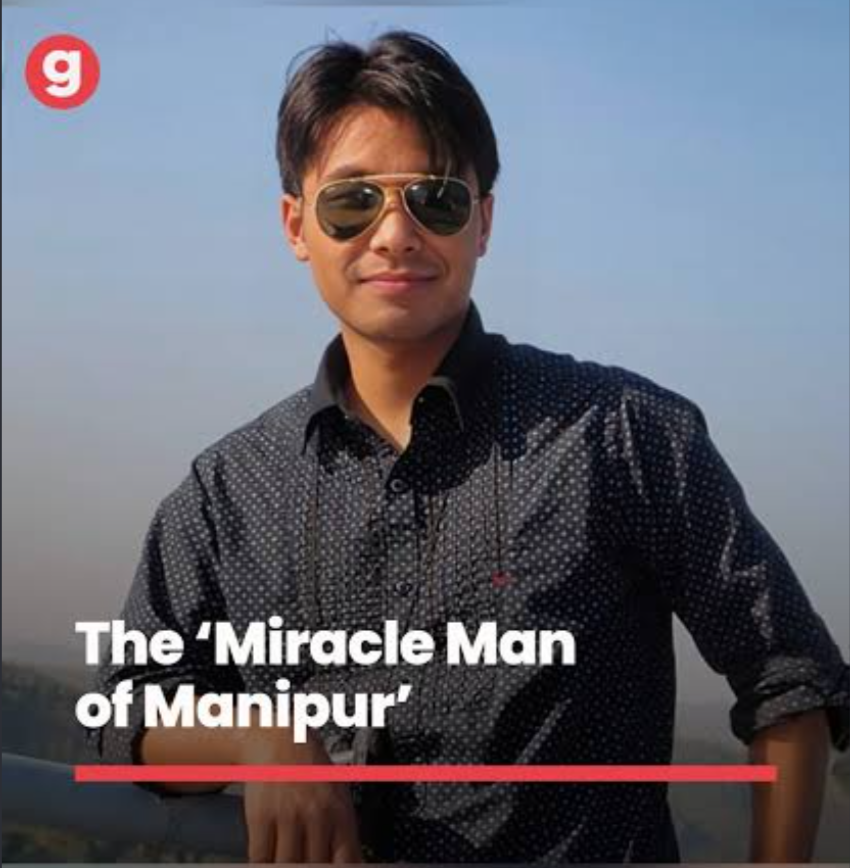
The story also demonstrated the power of social media when used for a constructive purpose.
Instead of using the internet only for communication or entertainment, Armstrong used it to connect people with a real-world problem.
That idea was remarkably ahead of its time.
13. Recognition for His Work
Armstrong Pame’s work received national attention.
He was nominated for the CNN-IBN Indian of the Year Award in the Public Service category in 2012.
In2015, he received India’s Most Eminent IAS Officer Award.
He was also invited to speak at universities and other forums about his experiences and approach to public service. The World Economic Forum profile of Armstrong Pame notes his work across several government roles and his engagement in inspirational talks, particularly with young people.
These awards were important, but they are not necessarily the most valuable part of his story.
A certificate can recognise an achievement.
A road can change someone’s daily life.
14. Armstrong Pame and The Better India
Armstrong’s story was also featured by The Better India, a platform known for highlighting constructive and positive stories from India.
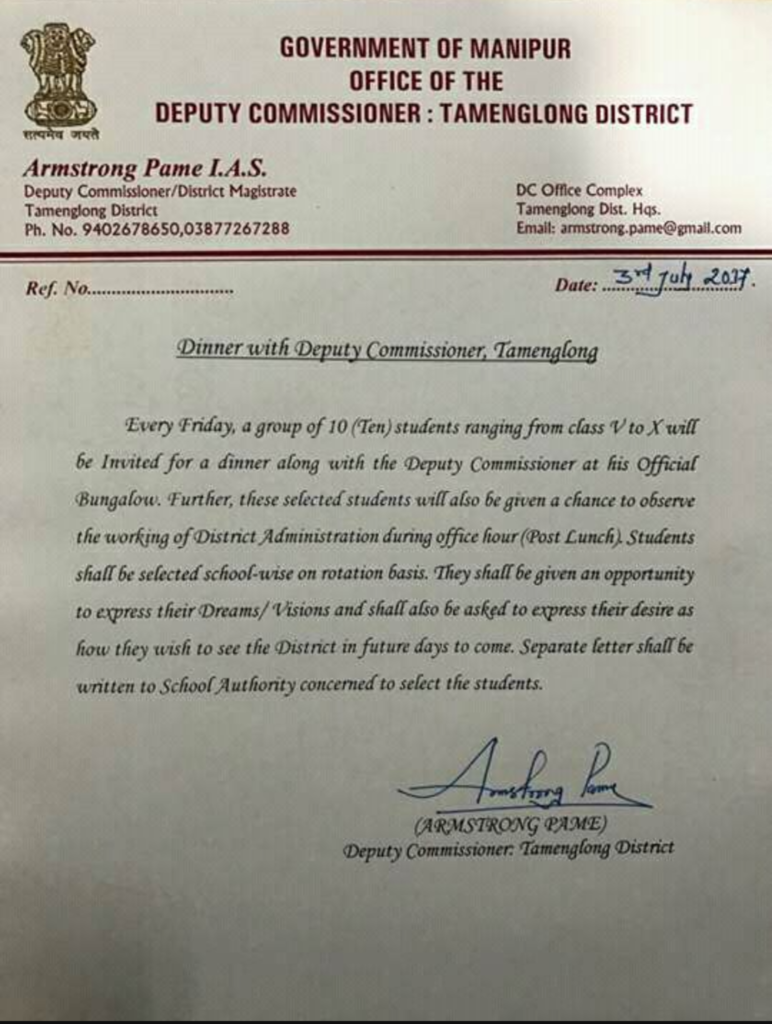
A 2017 Better India report focused on another initiative of Armstrong’s: inviting school students to his home for dinner every Friday. Students from Classes 5 to 10 were allowed to experience the life of an IAS officer and interact with him.
At first glance, this might seem like a small gesture compared with a 100-kilometre road.
But it reveals another side of his personality.
He was not only interested in solving today’s problems.
He was also interested in inspiring tomorrow’s generation.
Imagine being a student from a modest background and getting an opportunity to sit at the dining table of an IAS officer.
For that student, civil services may stop feeling like something distant.
It becomes something possible.
That is the kind of impact that does not always appear in government reports.
15. Positive News – Why Stories Like This Matter
Most news headlines tend to focus on conflict, accidents, political disagreements, disasters, and crises.
Those stories are important.
But they are not the whole picture of India.
There are also stories about people quietly solving problems.
Armstrong Pame’s story belongs to this second category.
It is positive news, but it is not positive because it ignores problems.
It is positive because it shows a response to a problem.
There was a lack of roads.
Someone acted.
There was isolation.
People came together.
There was a lack of resources.
A community found another way to contribute.
There was disappointment.
Someone decided not to stop.
This is why positive journalism is valuable.
It does not pretend that everything is perfect.
Instead, it asks:
“What are people doing to make things better?”
16. The UNESCO Connection – Development Beyond a Road
When discussing Armstrong Pame’s work in a broader academic context, it is useful to think about the ideas promoted by organisations such as UNESCO.
UNESCO’s work places importance on education, culture, sustainable development, inclusion and cooperation.
Armstrong’s story can be connected to these broader development principles because a road is not only an engineering structure.
Connectivity can support access to:
- Education
- Healthcare
- Economic opportunities
- Cultural exchange
- Social participation
- Public services

However, it is important not to describe the People’s Road as a UNESCO project or claim that UNESCO officially built or recognised the road unless there is specific evidence for such a claim.
The stronger connection is conceptual.
Armstrong’s work reminds us of a central idea in development:
People should not be left behind simply because they live far away.
Remote communities deserve opportunities just as much as communities in cities.
17. The Human Side of an IAS Officer
Perhaps the most interesting part of Armstrong Pame’s story is that he did not forget where he came from.
Many people leave their hometowns for education and career opportunities.
Armstrong did the same.
But when he achieved success, he returned to work among communities facing difficulties similar to those he had witnessed during childhood.
His past became a source of understanding.
He knew what it meant to travel through difficult terrain.
He knew what it meant to come from a place where opportunities were limited.
He understood why a road could matter so much.
This is an important quality in public service.
An administrator may know policies.
An administrator may understand statistics.
But an administrator who understands people’s lived experiences can sometimes see a problem differently.
18. His Approach to Leadership
Armstrong Pame’s leadership style appears to have been based on participation rather than simply giving orders.
He did not tell villagers:
“Wait for the government.”
Instead, he helped them ask:
“What can we do together?”
That is a powerful change.
Leadership is not always about standing in front of people.
Sometimes it is about standing with them.
The People’s Road demonstrates this principle.
The officer provided initiative and coordination, while local people contributed their labour, resources, and trust.
This type of leadership creates ownership.
When people participate in creating something, they are more likely to value and protect it.
19. Lessons for Students
Armstrong Pame’s life offers several lessons for students.
19.1 Your Background Does Not Decide Your Future
He came from a remote part of Manipur and eventually studied at one of Delhi’s prestigious colleges.
His childhood circumstances were difficult, but they did not determine how far he could go.
19.2 Education Can Change More Than One Life
His education transformed his own opportunities, but he later used his position to create opportunities for others.
19.3 Success Should Have a Purpose
Passing the Civil Services Examination was a major achievement.
But Armstrong’s story suggests that becoming an officer was not the final destination.
It was the beginning of responsibility.
19.4 Do Not Wait for a Perfect Situation
The road project did not begin under perfect conditions.
There were financial and administrative difficulties.
Yet action began.
19.5 People Are a Powerful Resource
The People’s Road demonstrates how ordinary citizens can contribute to solving extraordinary problems when they are given a reason to believe.
20. From a Student to a Civil Servant
If Armstrong Pame’s life were represented as a journey, it would not look like a straight line.
It would look more like a mountain road.
There were turns.
There were difficulties.
There were moments when another route could have been easier.
He began in a remote village.
He studied in Manipur.
He moved to Shillong.
He studied in Delhi.
He entered the civil services.
He returned to serve in the Northeast.
And eventually, his work on a road made him nationally recognised.
The physical road he helped create is almost a reflection of his own journey.
It connected distant places.
His life also connected different worlds:
village and city, student and officer, government and community, problem and solution.
21. His Later Career
Armstrong Pame’s career did not end with the People’s Road.
He has served in several government positions and worked in different areas of administration.
The World Economic Forum describes him as an IAS officer who has worked in multiple capacities in the Government of Manipur and the Government of India, including roles connected with tribal affairs, youth affairs and sports, public engineering, and other administrative responsibilities.
He has also served on central deputation and represented India in different professional and international settings.
In a recent public update in 2026, Pame wrote about returning to Manipur after more than four years working in different departments of the Government of India, expressing his intention to contribute to the development of his state and the country.
This is significant because it shows that the People’s Road was not a one-time act.
It was one chapter in a longer career of public service.
22. What Makes Armstrong Pame Different?
There are thousands of civil servants in India.
So what makes Armstrong Pame’s story stand out?
It is not simply the fact that he cleared the UPSC examination.
Thousands of talented candidates do that every year.
It is not simply that he became an IAS officer.
It is what he did with the position.
He looked at a problem that had existed for years and tried to bring people together to solve it.
He used his personal experiences to understand a public problem.
He used technology to mobilise support.
He encouraged community participation.
And he continued to engage with young people even after becoming successful.
That combination is what makes his story memorable.
23. The Road as a Symbol
The People’s Road can be viewed in two ways.
The first is literal.
It is a road connecting communities.
The second is symbolic.
It represents the distance between people and opportunity.
For a child in a remote village, the distance to a school may not only be measured in kilometres.
For a patient, the distance to a hospital can become a question of urgency.
For a farmer, the distance to a market can determine whether their hard work earns enough income.
For a family, poor connectivity can mean isolation.
Therefore, building a road can also mean reducing the distance between people and possibilities.
That is why the People’s Road became much more than an infrastructure project.
24. A Different Definition of Development
Armstrong Pame’s story encourages us to think about development differently.
Development is often represented through huge buildings, modern airports, technology parks and highways.
These are important.
But development also means a child in a remote village being able to attend school.
It means a patient being able to reach a hospital.
It means farmers having access to markets.
It means people living in remote areas feeling connected to the rest of the country.
The People’s Road represents this quieter form of development.
It is development at ground level.
25. What His Story Says About India
India is a country of enormous diversity.
There are metropolitan cities with advanced infrastructure, and there are villages where basic connectivity can still be a major challenge.
There are different landscapes, cultures, languages, and communities.
Armstrong Pame’s story is important because it draws attention to one of India’s less visible realities: the challenges faced by remote communities in the Northeast.
It reminds us that national development cannot be measured only by what happens in major cities.
India develops when its remote regions develop too.
26. Conclusion – The Road That Became a Message
Armstrong Pame’s story began in a small village in Manipur.
It passed through classrooms in Shillong and Delhi.
It continued through the demanding journey of the Civil Services Examination.
And eventually, it returned to the hills of Manipur.
But the most remarkable part of his journey was not becoming an IAS officer.
It was what he chose to do after becoming one.
When people needed a road, he did not see only a government file.
He saw people.
When resources were limited, he did not see only a dead end.
He looked for another possibility.
When the government could not immediately provide the solution, he helped bring the community into the process.
And when his story became famous, he continued to work with young people and inspire them.
The People’s Road therefore stands for something much larger than transportation.
It stands for initiative.
It stands for community participation.
It stands for hope.
Most importantly, it stands for the idea that public service should ultimately be about people.
Armstrong Pame’s journey teaches us that a person does not need to begin with extraordinary resources to create an extraordinary change.
Sometimes, all that is needed is the courage to look at an ordinary problem and say:
“Something has to change. Why can’t I begin?”
That is perhaps the real meaning behind the title “Miracle Man.”
The miracle was not that one officer built a road.
The miracle was that he helped people believe that a road they had waited years for could finally become a reality.
And that is why Armstrong Pame’s story deserves to be remembered—not merely as the story of an IAS officer, but as the story of a person who turned his understanding of hardship into an opportunity to serve others.
27. Key Takeaways
- Armstrong Pame was born in Impa village in Manipur’s Tamenglong district.
- He experienced the difficulties of living in a remote and poorly connected region.
- He studied in Manipur and Shillong before graduating in Physics from St. Stephen’s College, Delhi, in 2005.
- He initially entered the Indian Revenue Service before subsequently securing the IAS.
- He became part of the 2009 IAS batch.
- As an officer in Manipur, he witnessed the serious problems caused by poor road connectivity.
- In 2012, he helped mobilise local people and resources for a roughly 100-km road.
- The road became popularly known as the People’s Road and connected areas of Manipur with Nagaland and Assam.
- His work received national recognition, including India’s Most Eminent IAS Officer Award in 2015.
- He later continued working in various government positions and engaging with young people.
- His story is an example of community participation, innovative administration, and positive public service.
- His life demonstrates that effective leadership begins with understanding the problems of ordinary people.
28. Final Reflection
While studying Armstrong Pame’s journey, one thing becomes particularly clear:an officer’s success should not be measured only by the position they hold, but by the difference they make.
For me, the most inspiring part of his story is not the award, the title of IAS officer, or even the attention he received.
It is the image of a remote community finally seeing a possibility where they had once seen only difficulty.
A road may look like a simple thing when we see it every day.
But for someone who has spent years walking through difficult terrain, carrying necessities on their back, or struggling to reach a hospital, a road can represent freedom.
Armstrong Pame understood that.
And perhaps that is why his story continues to stand out.
He did not simply build a road.
He helped build a connection between people and possibility.
La Excellence IAS Academy, the best IAS coaching in Hyderabad, known for delivering quality content and conceptual clarity for UPSC 2025 preparation.
FOLLOW US ON:
◉ Youtube : https://www.youtube.com/@CivilsPrepTeam
◉ Facebook: https://www.facebook.com/LaExcellenceIAS
◉ Instagram: https://www.instagram.com/laexcellenceiasacademy/
GET IN TOUCH:
Contact us at info@laex.in, https://laex.in/contact-us/
or Call us @ +91 9052 29 2929, +91 9052 99 2929, +91 9154 24 2140
OUR BRANCHES:
Head Office: H No: 1-10-225A, Beside AEVA Fertility Center, Ashok Nagar Extension, VV Giri Nagar, Ashok Nagar, Hyderabad, 500020
Madhapur: Flat no: 301, survey no 58-60, Guttala begumpet Madhapur metro pillar : 1524, Rangareddy Hyderabad, Telangana 500081
Bangalore: Plot No: 99, 2nd floor, 80 Feet Road, Beside Poorvika Mobiles, Chandra Layout, Attiguppe, Near Vijaya Nagara, Bengaluru, 560040