
A Teachers’ Day Reflection by Geet Agarwal & Aanika Gowda
There are some people who teach you a subject.
And then there are those who teach you how to learn.
Teacher’s Day is usually associated with flowers, speeches, cards, performances, celebrations, and a lot of beautifully rehearsed “Thank you, teachers, for everything you do.” But somewhere between the decorations, the photographs, the wishes and the celebrations, there is a much bigger story — the story of the people who spend their days trying to make us understand things that, at first glance, seem impossible.

For us, Teacher’s Day is not simply about celebrating teachers for standing in front of a classroom and explaining a syllabus. It is about recognising the people behind that classroom — their patience, their humour, their expectations, their encouragement, their ability to notice things we sometimes think they don’t notice, and their willingness to explain the same concept ten different ways when the first nine clearly did not work.
And honestly, that last part deserves an award of its own.
Because teaching is not simply about knowing a subject.
It is about knowing your students.
It is about noticing when a student understands a concept instantly and when another student needs it explained with a completely different example. It is about recognising confused faces even when nobody raises a hand. It is about knowing when to slow down, when to push harder, when to repeat, when to ask a question, and sometimes when to say, “Okay, let’s forget everything for a second and start again.”
It is about understanding that every student enters a classroom with a different background, a different pace, a different level of confidence and a completely different way of processing information.
That is what makes a teacher memorable.
And that is also what makes our experience at La Excellence IAS Academy a little different.
WHERE TEACHING MEETS UNDERSTANDING
Preparing for competitive examinations is not exactly what anyone would describe as a walk in the park.
There are books, newspapers, concepts, current affairs, dates, articles, theories, thinkers, maps, committees, institutions, constitutional provisions, historical events, economic terms — and then there are the endless questions that somehow manage to make something we thought we understood ,suddenly feel completely new.
One minute, you are confidently thinking, “Yeah, I know this.”
The next minute, you see a question and suddenly question every academic decision you have ever made.
That is the reality of preparation.
It can be overwhelming.
And sometimes, the amount of information can make learning feel like a race against time.
But one thing we have slowly realised is that the right teacher can change the way you look at that mountain.
At La Excellence, what stands out to us is not just the amount of information being taught. It is the way it is taught.
The classroom does not feel like a one-size-fits-all system.
Because students aren’t one-size-fits-all either.
Some of us understand through stories.
Some need examples.
Some need a concept broken down into smaller pieces.
Some want the bigger picture first and the details later.
Some need repetition.
Some learn better through questions.
Some need to see how a topic connects to something they already know.
And some of us need the concept explained once, twice, and then one more time just to be completely sure.
There is nothing wrong with that.
Learning is not a competition to see who understands something first.
And good teachers understand that.
They change their pace.
They change their examples.
They change their explanations.
They change the way they approach a topic.
Sometimes, they even change their entire teaching style because the students sitting in front of them need something different.
That, to us, is student-centric teaching.
THE TEACHER WHO ADAPTS
One of the simplest ways to recognise a good teacher is to ask:
“Does he expect the student to adjust to them, or do they also adjust to the student?”
Our teachers have repeatedly shown us that teaching is a two-way process.
They observe.
They listen.
They understand.
And then they adapt.
A difficult topic can suddenly become a conversation.
A complicated theory can become a relatable example.
A lengthy topic can be reduced to the few things we actually need to remember.
A doubt that seemed too small to ask can become the starting point for an entire discussion.
And sometimes, the best teaching happens when he/she realises:
“Okay, they’re not getting this. Let me explain it differently.”
There is something genuinely special about that.
Because changing your teaching style does not mean compromising on standards.
If anything, it means caring enough about the student’s understanding to find another route to the same destination.
The destination remains the same.
The path changes.
And that is probably one of the biggest lessons our teachers have unknowingly taught us.
There is more than one way to reach understanding.
There is more than one way to explain an idea.
And there is more than one kind of student who can succeed.
Sometimes, the student does not need the subject to become easier.
They simply need someone to explain it in a language they understand.
That distinction matters.
LEARNING IS NOT ALWAYS LINEAR
One thing that is rarely talked about when we discuss education is how messy learning can actually be.
We often imagine learning as a straight line.
You attend a class.
You understand the topic.
You revise it.
You remember it.
You answer questions.
Done.
If only it were that simple.
Real learning is much less organised.
Sometimes we understand a concept today and forget half of it tomorrow.
Sometimes something we struggled with for weeks suddenly makes sense because of one example.
Sometimes a question opens up five more questions.
Sometimes we are confident about an answer and then discover that there is an entirely different perspective we had never considered.
And that is okay.
The teachers at La Excellence have shown us that learning does not have to be perfect to be meaningful.
They give us room to question.
They give us room to make mistakes.
They give us room to go back.
And most importantly, they give us room to understand rather than simply memorise.
That difference becomes especially important when preparing for civil services.
Because the goal cannot simply be to fill our heads with information.
We need to understand the information well enough to use it.
We need to connect one topic with another.
We need to develop the ability to look at an issue from different perspectives.
We need to question what we know.
And sometimes, we need to unlearn something we thought was completely correct.
That is where a teacher becomes much more than a teacher.
They become a guide.
THE PEOPLE BEHIND THE CLASSROOM
A classroom is often judged by its results.
Marks.
Ranks.
Scores.
Performance.
But students experience classrooms differently.
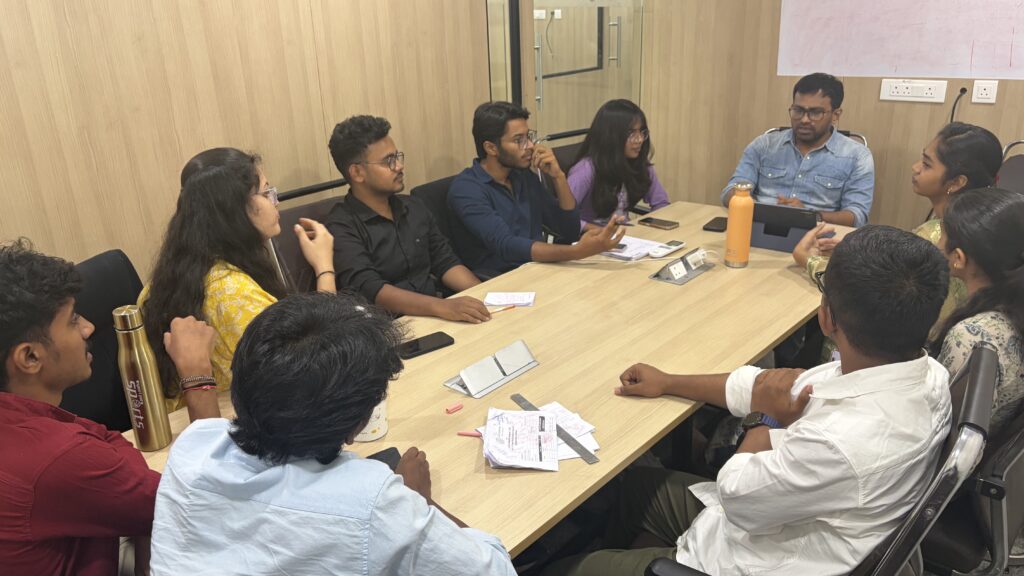
For a student, a classroom is also about the little moments.
The teacher who notices that everyone looks tired.
The joke that wakes up the room.
The question that makes everyone suddenly sit straight.
The explanation that finally makes a confusing topic click.
The unexpected example that somehow stays in your head.
The teacher who says something casually and you realise three days later that it actually changed the way you looked at a topic.
These moments may not appear in a syllabus.
They may not be written in our notebooks.
But they become part of our learning experience.
And every teacher brings something different to that experience.
Some bring structure.
Some bring humour.
Some bring discipline.
Some bring patience.
Some challenge us.
Some reassure us.
Some make us question.
Some make us think bigger.
Some somehow manage to do all of these things in the same class.
That variety is what makes a classroom human.
Every classroom has its own characters.
There is the teacher who can make an ordinary topic interesting.
He/she whose sarcasm arrives exactly when everyone needs a little wake-up call.
The teacher who notices everything.
The teacher who expects more from us than we expect from ourselves.
The teacher who can turn a ten-minute explanation into something we remember for ten days.
And then there is the teacher who somehow manages to make us laugh while teaching something we were convinced would put us to sleep.
Each teacher has a completely different personality.
And that is what makes the classroom interesting.
So, rather than describing them with the usual words like “knowledgeable, hardworking and inspiring,” we wanted to describe them in a way that feels a little more like our classroom experience.
Because teachers are people too.
They have personalities.
They have their own ways of explaining.
Their own expressions.
Their own classroom habits.
Their own sense of humour.
Their own expectations.
Their own way of saying, “You should know this by now.”
And somehow, we know exactly what they mean.
So here are the people who make our classrooms what they are.
THE COMMON THREAD
Different personalities.
Different teaching styles.
Different ways of explaining.
Different classroom energies.
Different approaches to learning.
Yet there is one thing that connects all of them:
They teach according to the student, not just according to the syllabus.
And that is something we have come to appreciate more and more.
A teacher-centric classroom asks students to fit into a fixed method.
A student-centric classroom asks:
“How can I make this student understand?”
That difference may sound small.
It isn’t.
It changes the entire learning experience.
It means a teacher is willing to repeat an explanation without making a student feel embarrassed.
It means examples can change when the original explanation does not work.
It means questions are welcomed instead of treated as interruptions.
It means different students can learn the same concept in different ways.
It means the teacher is not simply trying to finish a chapter.
They are trying to make sure the chapter has actually reached the student.
And perhaps most importantly, it means the teacher sees the student as an individual rather than simply another person sitting in a classroom.
That is something worth recognising.
WHEN A CLASSROOM BECOMES A COMMUNITY
A good classroom is not simply a place where information moves from a teacher to a student.
It becomes a community.
A space where people ask questions, share opinions, make mistakes, disagree, learn and try again.
Over time, they begin to understand the rhythm of their students.
They know when the class is fully engaged.
They know when everyone needs a little push.
They know when a topic is going over everyone’s head.
And students, in turn, begin to understand their teachers.
We know the tone that means a question is coming.
We know when the explanation is about to become “very important for the exam.”
We know when a teacher is joking.
And we definitely know when they are not.
These small classroom dynamics are what make learning feel less mechanical.
It becomes personal.
It becomes memorable.
And sometimes, years later, it is these little moments that we remember more clearly than the actual notes.
WHAT WE TAKE BEYOND THE CLASSROOM
Teacher’s Day often makes us think about what they have taught us.
For us, the answer goes beyond subjects.
They have taught us patience.
They have taught us discipline.
They have taught us to ask better questions.
They have taught us that not understanding something immediately does not mean we cannot understand it eventually.
They have taught us that knowledge is not just about remembering information — it is about knowing how to use it.
They have taught us that confidence does not always come before understanding.
Sometimes, confidence comes because of understanding.
And, perhaps unknowingly, they have taught us something else:
There is no single correct way to learn.
Sometimes you need a textbook.
Sometimes you need a discussion.
Sometimes you need a diagram.
Sometimes you need an example from everyday life.
Sometimes you need repetition.
And sometimes, you need a teacher who looks at your confused face and realises that the explanation needs a complete reboot.
That flexibility is not just good teaching.
It is good mentorship.
THE VALUE OF BEING SEEN
There is one thing every student silently wants from a classroom:
To feel seen.
Not necessarily praised.
Not necessarily treated differently.
Just seen.
To know that the teacher recognises when you are struggling.
To know that asking a question will not make you feel foolish.
To know that needing another explanation is not a weakness.
To know that your learning matters.
Student-centric teaching creates exactly that feeling.
It tells students that they are not expected to fit into a predetermined mould.
Instead, the teacher is willing to meet them somewhere in the middle.
That does not mean lowering expectations.
In fact, sometimes it means raising them.
Because when someone takes the time to understand how you learn, they can also challenge you more effectively.
They can identify your weaknesses.
They can push you beyond what feels comfortable.
They can tell you when you are capable of more.
And sometimes, that honest push is exactly what a student needs.
A THANK YOU THAT GOES BEYOND “THANK YOU”
So, on this Teacher’s Day, we — Aanika and Geet — wanted to do something a little different.
Instead of simply saying Happy Teacher’s Day, we wanted to acknowledge the small things that often go unnoticed.
The extra explanation.
The repeated concept.
An unexpected example.
The question asked at exactly the right moment.
The sarcasm that somehow makes us remember a topic.
The encouragement after a difficult class.
The patience when we are clearly not getting it.
The willingness to change the approach.
The expectation that we can do better.
And the belief that we actually can.
These things may seem small in isolation.
But together, they create an environment where students feel that their learning matters.
And that is probably one of the greatest gifts a teacher can give.
Teachers often do much more work than students see.
We see the hour spent in the classroom.
We do not always see the preparation behind it.
We see the explanation.
We do not always see the thought that went into finding the right example.
We see the questions.
We do not always see the effort to make sure the answers are understood.
And perhaps that is why Teacher’s Day matters.
It gives us a chance to look beyond the classroom hour and appreciate everything that happens behind it.
TO OUR TEACHERS
If there is one thing we would want our teachers to know, it is this:
We may not remember every single slide.
We may not remember every definition.
We may forget a few dates, theories, names and probably more than a few things we confidently thought we knew before the exam.
But we will remember how you made us learn.
We will remember the teacher who explained something differently when we did not understand.
We will remember the teacher who pushed us when we were playing it safe.
We will remember the teacher whose humour made a difficult morning slightly better.
We will remember the teacher who listened.
We will remember the teacher who expected more.
We will remember the teacher who made a complicated subject feel manageable.
We will remember the teacher who made us question something we had simply accepted.
We will remember the teacher who told us to look at the bigger picture.
We will remember the teacher who made us realise that learning is not about having every answer immediately.
And we will remember the teachers who made us believe that maybe, just maybe, we are capable of more than we initially thought.
That belief can stay with a student for a very long time.
BECAUSE TEACHING IS MORE THAN A PROFESSION
A syllabus can tell you what to study.
A textbook can tell you what to read.
A test can tell you what you remember.
But a teacher can influence how you think.
And that influence stays long after the classroom ends.
That is why Teacher’s Day is more than a celebration.
It is a pause.
A moment to look around and realise how many people have contributed to the person we are becoming.
For us, La Excellence has been more than a place where subjects are taught.
It has been a place where we are learning how to approach knowledge, how to question it, how to understand it, and eventually, how to make sense of a world that is far more complicated than any textbook can explain.
And behind that journey are teachers who continue to adjust, adapt, explain, challenge, encourage and sometimes even tolerate our very obvious “I definitely understood this” faces when we absolutely did not.
That is what makes the experience human.
It is not perfect.
It does not have to be.
Learning is allowed to be confusing.
Questions are allowed to be silly.
Answers are allowed to change.
Students are allowed to struggle.
And teachers are allowed to try different ways until something finally clicks.
That is how real learning happens.
FROM A CLASSROOM TO A JOURNEY
Perhaps the most beautiful thing about teaching is that teachers rarely get to see the entire impact of their work.
They teach a student today without knowing exactly where that student will be tomorrow.
A concept explained in a classroom may become useful years later.
A piece of advice may return at a completely unexpected moment.
A question asked during a class may change the way a student approaches an entire subject.
A teacher may forget saying something.
The student may remember it for years.
That is the strange and wonderful thing about education.
Its impact is not always immediate.
Sometimes, it takes time.
And perhaps that is why the role of a teacher cannot be measured only through marks or results.
A teacher can influence confidence.
Curiosity.
Discipline.
Perspective.
Thinking.
And even the willingness to keep trying.
Those things may not fit neatly into a report card, but they matter.
OUR SIMPLEST THANK YOU
So, this Teacher’s Day, we are not just celebrating the teachers who complete our syllabus.
We are celebrating the teachers who make us want to understand it.
We are celebrating the teachers who notice.
The teachers who adapt.
The teachers who explain.
The teachers who question.
The teachers who challenge.
The teachers who encourage.
The teachers who make space for different kinds of learners.
The teachers who know that a student is more than a mark, a rank, or a test score.
And most importantly, we are celebrating the teachers who remind us that education is not simply about knowing more.
It is about becoming better at thinking.
A FINAL NOTE
Teacher’s Day comes once a year.
But the influence of a good teacher does not.
It continues in the way we approach a question.
In the way we handle a difficult topic.
In the way we respond when we do not understand something.
In the confidence to ask for help.
In the discipline to try again.
In the curiosity to look beyond the obvious answer.
And maybe, one day, when we find ourselves explaining something to someone else, we will unknowingly use a method our teachers once used with us.
That is when we realise that teaching does not really end when the class ends.
It travels.
From teacher to student.
From one generation to another.
And perhaps that is the real meaning of Teacher’s Day.
Not simply saying “Thank you for teaching us.”
But saying:
“Thank you for becoming a part of the way we learn, think and grow.”
For us, La Excellence is not just a collection of classrooms, books and lessons.
It is the people who fill those classrooms with personality.
It is the teachers who make space for questions.
It is the teachers who adjust their methods without losing sight of their standards.
It is the teachers who understand that every student learns differently.
And it is the teachers who make a demanding journey feel a little more possible.
So, from the two of us — Aanika and Geet — this is our small attempt to put into words something that is honestly much bigger than words.
To every teacher who has explained something one more time.
To every teacher who has challenged us.
To every teacher who has encouraged us.
To every teacher who has made us laugh.
To every teacher who has patiently waited for the “Ohhh, now I get it” moment.
And to every teacher who has changed their approach simply because they wanted their students to understand —
Happy Teacher’s Day.
Thank you for not just teaching us what to learn, but for showing us how to learn.
Because long after the notes are closed, the exams are over and the classroom is left behind, the lessons that truly stay with us are often the ones taught by people who cared enough to teach us differently.
And for that, we will always be grateful.
With gratitude,
Aanika & Geet
La Excellence IAS Academy, the best IAS coaching in Hyderabad, known for delivering quality content and conceptual clarity for UPSC 2025 preparation.
FOLLOW US ON:
◉ Youtube : https://www.youtube.com/@CivilsPrepTeam
◉ Facebook: https://www.facebook.com/LaExcellenceIAS
◉ Instagram: https://www.instagram.com/laexcellenceiasacademy/
GET IN TOUCH:
Contact us at info@laex.in, https://laex.in/contact-us/
or Call us @ +91 9052 29 2929, +91 9052 99 2929, +91 9154 24 2140
OUR BRANCHES:
Head Office: H No: 1-10-225A, Beside AEVA Fertility Center, Ashok Nagar Extension, VV Giri Nagar, Ashok Nagar, Hyderabad, 500020
Madhapur: Flat no: 301, survey no 58-60, Guttala begumpet Madhapur metro pillar : 1524, Rangareddy Hyderabad, Telangana 500081
Bangalore: Plot No: 99, 2nd floor, 80 Feet Road, Beside Poorvika Mobiles, Chandra Layout, Attiguppe, Near Vijaya Nagara, Bengaluru, 560040