
Paper: GS – II, Subject: International Relations, Topic: Global issues, Issue: South Sudan Crisis: Civil War and Deepening Humanitarian.
Context:
South Sudan is facing renewed violence between rival political factions, raising fears of a return to civil war. The conflict has worsened displacement, food insecurity and humanitarian distress in the country.
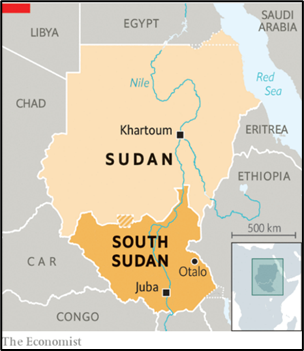
Key Takeaways:
Background:
- South Sudan became independent from Sudan on 9 July 2011, making it the world’s youngest country.
- Its formation followed decades of conflict between the Sudanese government and southern groups over marginalisation, identity, resources and political autonomy.
- The Comprehensive Peace Agreement, 2005 ended the Second Sudanese Civil War and allowed a referendum, in which South Sudan voted for independence.
- However, the new country inherited weak institutions, poverty, ethnic divisions, underdeveloped infrastructure and armed political rivalries.
- In 2013, conflict broke out between forces loyal to President Salva Kiir and Riek Machar, turning political rivalry into a civil war with ethnic dimensions.
Explanation:
Present Conflict:
- The 2018 peace agreement created a transitional power-sharing arrangement, but key reforms remained incomplete.
- Security-sector reform, integration of armed groups, constitutional arrangements and elections have remained major unresolved issues.
- Renewed clashes show that the peace process remains fragile.
Humanitarian Crisis:
- Civilians are facing displacement, hunger, insecurity and disruption of essential services.
- Food insecurity has worsened due to conflict, poor governance, climate shocks and obstruction of humanitarian access.
- Health centres, schools and relief operations remain vulnerable in conflict-affected regions.
International Role:
- UNMISS works to protect civilians, support peace efforts, monitor human-rights violations and facilitate humanitarian assistance.
- India has contributed significantly to UN peacekeeping in South Sudan.
Conclusion:
South Sudan’s crisis reflects the difficulty of state-building after independence when institutions remain weak and political reconciliation is incomplete. Sustainable peace requires genuine power-sharing, security reform, elections and humanitarian access. Without these, the country may face deeper conflict and famine-like conditions.
Source: (The Indian Express)
La Excellence IAS Academy, the best IAS coaching in Hyderabad, known for delivering quality content and conceptual clarity for UPSC 2026 preparation.
FOLLOW US ON:
◉ YouTube : https://www.youtube.com/@CivilsPrepTeam
◉ Facebook: https://www.facebook.com/LaExcellenceIAS
◉ Instagram: https://www.instagram.com/laexcellenceiasacademy/
GET IN TOUCH:
Contact us at info@laex.in, https://laex.in/contact-us/
or Call us @ +91 9052 29 2929, +91 9052 99 2929, +91 9154 24 2140
OUR BRANCHES:
Head Office: H No: 1-10-225A, Beside AEVA Fertility Center, Ashok Nagar Extension, VV Giri Nagar, Ashok Nagar, Hyderabad, 500020
Madhapur: Flat no: 301, survey no 58-60, Guttala begumpet Madhapur metro pillar: 1524, Rangareddy Hyderabad, Telangana 500081
Bangalore: Plot No: 99, 2nd floor, 80 Feet Road, Beside Poorvika Mobiles, Chandra Layout, Attiguppe, Near Vijaya Nagara, Bengaluru, 560040