
Paper: GS-III, Subject: Indian Economy, Topic: Financial Markets, Issue: Tata Sons Listing
Context
The Reserve Bank of India (RBI) has reportedly directed Tata Sons to list its shares on a recognised stock exchange, such as the BSE or NSE, where investors can buy and sell them. Tata Sons has sought to remain privately held. The dispute centres on whether its financial importance requires greater public accountability despite its owners’ preference for private control.
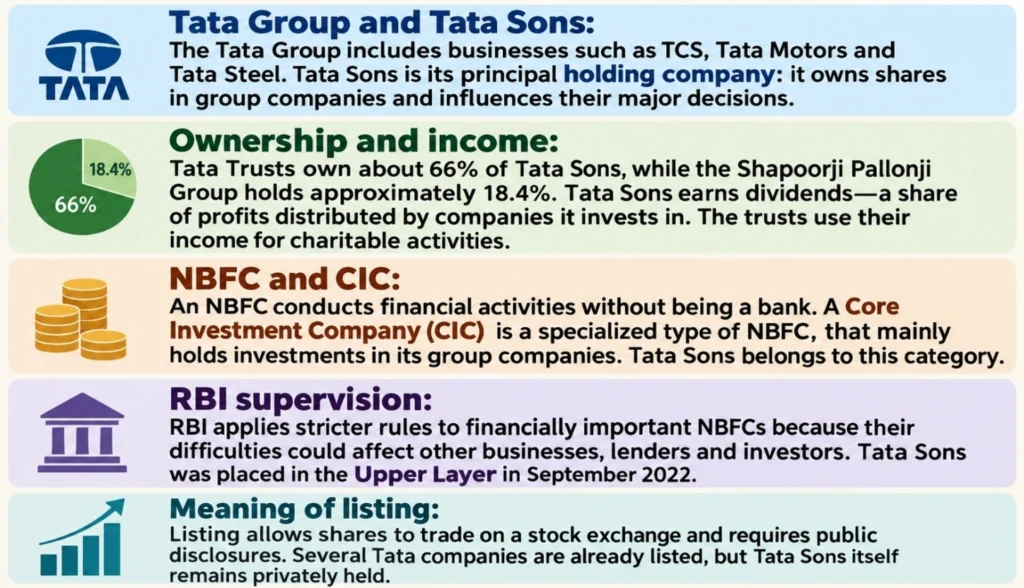
Understanding the Dispute
What Has RBI Asked Tata Sons to Do?
- Become publicly traded: RBI wants Tata Sons to make its shares available for trading on a stock exchange. This concerns shares of Tata Sons itself, not shares of TCS, Tata Motors or other group companies already traded separately.
- Follow the listing deadline: RBI requires Upper-Layer NBFCs to list within three years of identification. Tata Sons’ original deadline was September 2025.
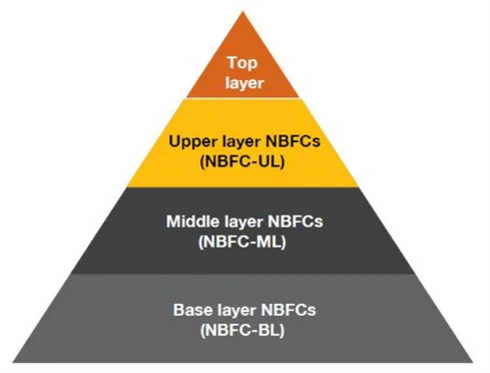
Why Does RBI Want It Listed?
- Financial importance: Tata Sons holds investments across a large business group. Financial trouble or poor decisions at this level could affect group companies, lenders and investors.
- Greater transparency: Listing would require regular publication of financial results and disclosure of important decisions, helping investors understand how the company uses money and manages risks.
- Stronger scrutiny: Executive pay, major investments and transactions between related companies would face closer examination. However, listing itself cannot eliminate financial risk.
Why Has Tata Sons Been Reluctant?
- Preference for private control: Remaining unlisted allows existing owners to retain greater flexibility over ownership and decision-making, without the additional obligations of stock-market listing.
- Long-term priorities: Opponents fear that pressure for short-term profits could affect investments and the dividend income supporting Tata Trusts’ charitable activities.
- Important distinction: Listing does not automatically mean losing majority control. Its effects depend on how many shares are sold or newly issued and the governance rules applied.
How Did Tata Sons Try to Avoid Listing?
- Debt repayment: It repaid over ₹21,000 crore in borrowings and applied to surrender its NBFC registration, arguing that it no longer directly accessed public funds.
- Reasoning: If deregistration were approved, it sought to move outside the Upper-Layer listing requirement.
- RBI’s response: The regulator reportedly rejected the application. Repaying direct debt does not automatically end registration; applicable conditions, including indirect funding arrangements, must also be examined.
What Do Different Shareholders Want?
- Tata Trusts: Their established position favours remaining private. However, internal differences have been reported: Noel Tata opposes listing, while Venu Srinivasan and Vijay Singh have supported it.
- Shapoorji Pallonji Group: It supports listing because a market price and easier share sales could help it raise money and manage debt.
- Remaining shareholders: Roughly 15.6% is held by Tata group companies and individual/family holdings. Corporate shareholders include Tata Steel, Tata Motors, Tata Chemicals, Tata Power and Tata Investment Corporation. They could benefit from clearer valuation, but a collective position supporting listing is not established.
Way Forward
- Tata Sons should establish a compliant listing plan or pursue lawful regulatory or judicial relief.
- Any transition should ensure transparent valuation, minority-shareholder protection and appropriate safeguards for philanthropic objectives.
Conclusion
RBI seeks greater accountability from a financially important company, while Tata Sons’ opponents of listing seek to preserve private control. The challenge is to reconcile these interests without weakening financial supervision.
Source: (The Hindu)
La Excellence IAS Academy, the best IAS coaching in Hyderabad, known for delivering quality content and conceptual clarity for UPSC 2026 preparation.
FOLLOW US ON:
◉ YouTube : https://www.youtube.com/@CivilsPrepTeam
◉ Facebook: https://www.facebook.com/LaExcellenceIAS
◉ Instagram: https://www.instagram.com/laexcellenceiasacademy/
GET IN TOUCH:
Contact us at info@laex.in, https://laex.in/contact-us/
or Call us @ +91 9052 29 2929, +91 9052 99 2929, +91 9154 24 2140
OUR BRANCHES:
Head Office: H No: 1-10-225A, Beside AEVA Fertility Center, Ashok Nagar Extension, VV Giri Nagar, Ashok Nagar, Hyderabad, 500020
Madhapur: Flat no: 301, survey no 58-60, Guttala begumpet Madhapur metro pillar: 1524, Rangareddy Hyderabad, Telangana 500081
Bangalore: Plot No: 99, 2nd floor, 80 Feet Road, Beside Poorvika Mobiles, Chandra Layout, Attiguppe, Near Vijaya Nagara, Bengaluru, 560040