
Paper: GS-II & GS-III | Subject: Science & Technology | Topic: Intellectual Property Rights | Issue: Drug patents, affordable healthcare and tuberculosis elimination
Context
The Indian Patent Office has rejected a patent application covering the combination of three tuberculosis (TB) medicines: bedaquiline, pretomanid and linezolid. This could encourage generic competition and improve access to BPaL, a shorter treatment regimen for drug-resistant TB, particularly important for India, which accounts for approximately one-quarter of global TB cases.
Explanation: 𝐖𝐡𝐲 𝐈𝐧𝐝𝐢𝐚’𝐬 𝐑𝐞𝐣𝐞𝐜𝐭𝐢𝐨𝐧 𝐨𝐟 𝐚 𝐓𝐁 𝐃𝐫𝐮𝐠 𝐏𝐚𝐭𝐞𝐧𝐭 𝐌𝐚𝐭𝐭𝐞𝐫𝐬

1. What Makes BPaL Important?
- Shorter treatment: BPaL is a six-month, all-oral regimen, compared with older treatments lasting longer and sometimes requiring injections.
- Better outcomes: The article reports approximately 89% treatment success, compared with 52-75% for conventional regimens.
- Patient benefits: Shorter treatment improves adherence, reduces financial hardship and lowers the risk of treatment interruption.
- Public health: India has already enrolled over 15,000 patients under its national TB programme.
2. Why Was the Patent Rejected?
- Patent application: The US-based Global Alliance for TB Drug Development sought exclusive rights over the BPaL drug combination.
- Pre-grant opposition: Patient organisations and public-interest groups challenged the application before patent approval.
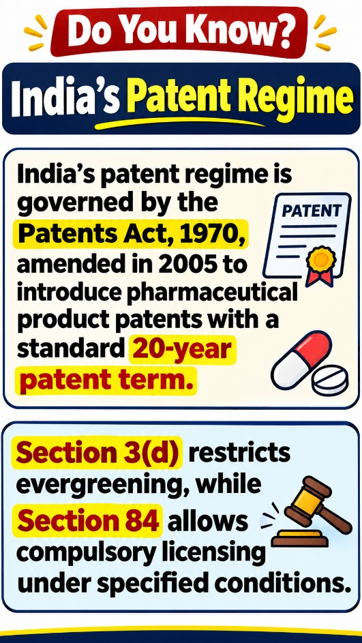
- Patent evergreening: The controversy concerns attempts to extend exclusivity through additional patents involving existing medicines or combinations.
- Decision: Rejection prevents this particular application from creating exclusive rights over the combination in India.
3. Why Does This Matter for India?
- Affordable medicines: Generic manufacturers could compete, potentially reducing treatment prices.
- Reduced expenditure: Lower procurement costs could help the government treat more patients within existing budgets.
- Health equity: Economically vulnerable patients could benefit from wider access to effective treatment.
- Domestic manufacturing: Indian pharmaceutical manufacturers may gain opportunities to produce affordable BPaL medicines.
- Disease elimination: Improved access supports the National TB Elimination Programme (NTEP) and Universal Health Coverage.
4. Remaining Challenges
- Patent rejection does not automatically establish drug availability or affordability.
- Generic medicines require regulatory approval, quality assurance and reliable supply chains.
- Effective implementation also needs early diagnosis, uninterrupted treatment and patient support.
Conclusion
The patent rejection highlights the importance of balancing intellectual property protection with public health. However, affordable treatment requires more than patent reform. Generic competition, regulatory oversight, dependable procurement and effective healthcare delivery must work together to strengthen India’s fight against tuberculosis.
Source: (The Indian Express)
La Excellence IAS Academy, the best IAS coaching in Hyderabad, known for delivering quality content and conceptual clarity for UPSC 2026 preparation.
FOLLOW US ON:
◉ YouTube: https://www.youtube.com/@CivilsPrepTeam
◉ Facebook: https://www.facebook.com/LaExcellenceIAS
◉ Instagram: https://www.instagram.com/laexcellenceiasacademy/
GET IN TOUCH:
Contact us at info@laex.in, https://laex.in/contact-us/
or Call us @ +91 9052 29 2929, +91 9052 99 2929, +91 9154 24 2140
OUR BRANCHES:
Head Office: H No: 1-10-225A, Beside AEVA Fertility Center, Ashok Nagar Extension, VV Giri Nagar, Ashok Nagar, Hyderabad, 500020
Madhapur: Flat no: 301, survey no 58-60, Guttala begumpet Madhapur metro pillar: 1524, Rangareddy Hyderabad, Telangana 500081
Bangalore: Plot No: 99, 2nd floor, 80 Feet Road, Beside Poorvika Mobiles, Chandra Layout, Attiguppe, Near Vijaya Nagara, Bengaluru, 560040