
Paper: GS III | Subject: Environment, Ecology and Disaster Management | Topic: Basics of Environment | Issue: Illegal Sand Mining and Sustainable River Management
Context
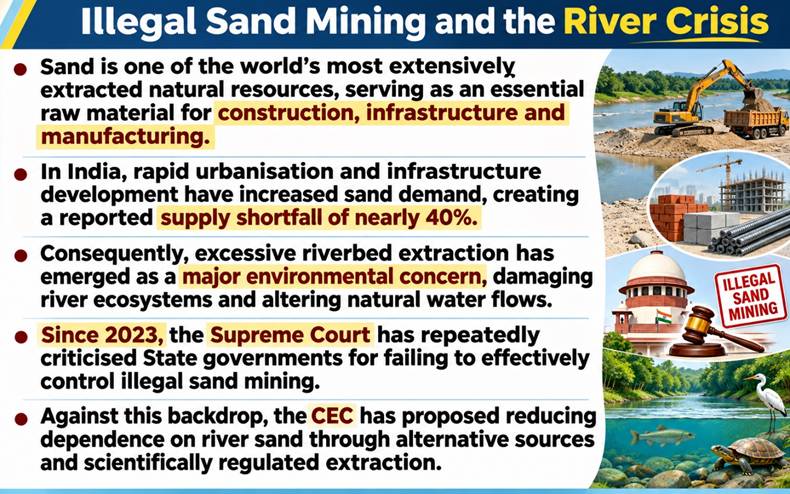
The Supreme Court-appointed Central Empowered Committee (CEC) has recommended a three-year roadmap to phase out unsustainable sand extraction from active river channels. Amid growing construction demand and widespread illegal mining, the proposal seeks to balance India’s infrastructure requirements with river conservation and sustainable sediment management.
Why Is Sand Mining Illegal?
Sand mining itself is not prohibited everywhere. However, extraction without legal authorisation or in violation of environmental conditions constitutes illegal mining.
- Mines and Minerals (Development and Regulation) Act, 1957 (MMDR Act): Regulates mineral extraction. Section 4 restricts mining without lawful authority, while Section 21 prescribes penalties.
- State Minor Mineral Rules: States regulate sand mining through powers granted under Sections 15 and 23C of the MMDR Act.
- EIA Notification, 2006: Requires applicable environmental clearances before mining operations.
- Sand Mining Guidelines, 2016 and 2020: Establish safeguards for sustainable extraction, monitoring and transportation.
Major Sand Mining Hotspots in India
- Chambal River: Illegal extraction in Madhya Pradesh and Rajasthan threatens aquatic habitats within the National Chambal Sanctuary.
- Yamuna River: Mining violations have been reported around the Haryana–Uttar Pradesh border and Delhi-Ghaziabad stretches.
- Son River: Illegal mining allegations in Bihar’s Rohtas district have prompted National Green Tribunal proceedings.
Environmental Impacts of Excessive Sand Mining
- Riverbed degradation: Deepens river channels, destabilises riverbanks and disrupts natural river morphology.
- Increased erosion: Altered sediment movement causes downstream erosion, threatening agricultural lands and infrastructure.
- Ecological damage: Destroys aquatic habitats and threatens biodiversity, including fish, turtles and gharials.
- Hydrological changes: Disrupts groundwater recharge and alters natural river-flow patterns.
Major Recommendations of the CEC
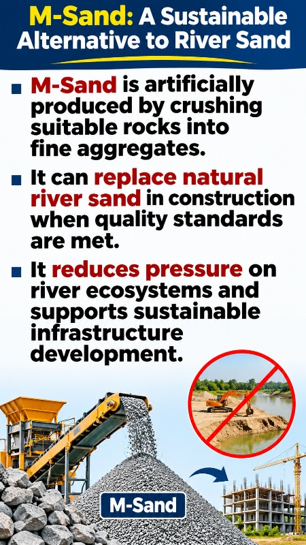
1. Phased Reduction of River Sand Mining: Develop a three-year roadmap to phase out unsustainable sand extraction from active river channels. Promote manufactured sand and recycled construction materials as alternatives.
2. Desilting of Dams and Reservoirs: Explore recovering accumulated reservoir sediments as an alternative construction material. Scientifically planned desilting can restore water-storage capacity and improve reservoir functioning.
3. National Sediment Management Framework: The Ministry of Jal Shakti should prepare a national framework identifying reservoir-wise sediment availability. Establish financing arrangements, environmental safeguards and scientific assessments before extraction.
Challenges in Implementation
- Ecological concerns: Natural sediments sustain downstream ecosystems, making indiscriminate desilting potentially harmful.
- Technical feasibility: A 2022 committee headed by former CWC Chairman B.K. Mittal found large-scale desilting economically and technologically unviable.
- Information gaps: Reliable nationwide estimates of recoverable reservoir sediments remain unavailable.
- Construction demand: Continued demand for inexpensive sand complicates enforcement.
Way Forward
- Encourage manufactured sand (M-sand) and recycled construction materials.
- Permit desilting only at scientifically identified locations following environmental assessments.
- Strengthen surveillance using drones, GPS tracking and digital transit permits.
- Develop river-specific sediment management plans balancing ecological and developmental needs.
Conclusion
India must reconcile construction requirements with the ecological integrity of its rivers. Sustainable sand management requires scientific regulation, alternative materials and effective enforcement rather than indiscriminate extraction.
Source: (The Indian Express)
La Excellence IAS Academy, the best IAS coaching in Hyderabad, known for delivering quality content and conceptual clarity for UPSC 2026 preparation.
FOLLOW US ON:
◉ YouTube: https://www.youtube.com/@CivilsPrepTeam
◉ Facebook: https://www.facebook.com/LaExcellenceIAS
◉ Instagram: https://www.instagram.com/laexcellenceiasacademy/
GET IN TOUCH:
Contact us at info@laex.in, https://laex.in/contact-us/
or Call us @ +91 9052 29 2929, +91 9052 99 2929, +91 9154 24 2140
OUR BRANCHES:
Head Office: H No: 1-10-225A, Beside AEVA Fertility Center, Ashok Nagar Extension, VV Giri Nagar, Ashok Nagar, Hyderabad, 500020
Madhapur: Flat no: 301, survey no 58-60, Guttala begumpet Madhapur metro pillar: 1524, Rangareddy Hyderabad, Telangana 500081
Bangalore: Plot No: 99, 2nd floor, 80 Feet Road, Beside Poorvika Mobiles, Chandra Layout, Attiguppe, Near Vijaya Nagara, Bengaluru, 560040