
Paper: GS – III, Subject: Economy, Topic: Energy Security, Issue: Ethanol Expansion and India ‘s Energy Transition Challenges.
Context:
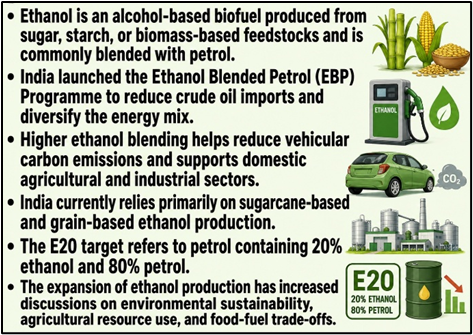
India has rapidly expanded ethanol blending as part of its broader energy transition strategy aimed at reducing dependence on imported crude oil, strengthening energy security, lowering carbon emissions, and supporting rural incomes. The achievement of higher ethanol blending levels marks a major shift in India’s fuel policy, but it has also generated important debates regarding sustainability, food security, water use, and long-term energy planning.
Objectives Behind Ethanol Expansion:
1. Reducing Import Dependence:
- Ethanol blending lowers petroleum consumption and reduces crude oil import dependence.
- It helps reduce vulnerability to global oil price shocks.
2. Strengthening Energy Security:
- Domestic biofuel production diversifies India’s energy sources.
- It improves resilience against global supply disruptions.
3. Supporting Farmers and Rural Economy:
- Ethanol production creates additional income opportunities for farmers and distilleries.
- It strengthens rural industrial activity.
4. Environmental Benefits:
- Ethanol burns cleaner than conventional petrol.
- It supports India’s clean energy and emission reduction goals.
Major Concerns in India’s Ethanol Expansion:
1. Water Stress and Ecological Pressure:
- Sugarcane cultivation is highly water-intensive.
- Large-scale ethanol production may worsen groundwater depletion.
2. Food Security Concerns: Diversion of food grains toward fuel production may affect food availability during poor harvest years.
3. Cropping Pattern Distortions: Farmers may increasingly shift toward fuel-linked crops due to higher returns.
4. Infrastructure and Vehicle Compatibility:
- Higher blending requires major expansion of storage and blending infrastructure.
- Many existing vehicles are not fully compatible with higher ethanol blends.
Need for a Balanced Biofuel Strategy:
1. Sustainable Transition: Energy security must be balanced with environmental and food security concerns.
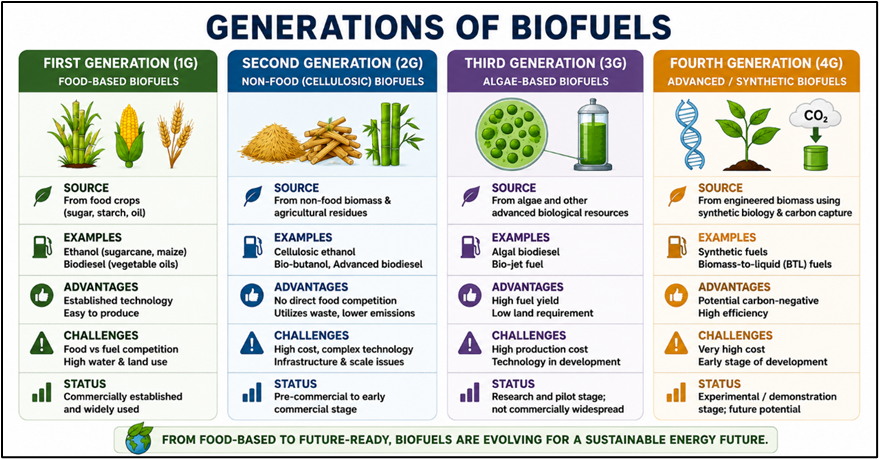
2. Priority for Advanced Biofuels: Greater focus on second-generation (2G) biofuels can reduce long-term ecological pressures.
Conclusion:
India’s ethanol expansion can strengthen energy security and reduce import dependence. However, long-term success will depend on balancing economic benefits with sustainability, food security, and efficient resource use.
Source: (The Indian Express, The Hindu, Live Mint)
La Excellence IAS Academy, the best IAS coaching in Hyderabad, known for delivering quality content and conceptual clarity for UPSC 2026 preparation.
FOLLOW US ON:
◉ YouTube : https://www.youtube.com/@CivilsPrepTeam
◉ Facebook: https://www.facebook.com/LaExcellenceIAS
◉ Instagram: https://www.instagram.com/laexcellenceiasacademy/
GET IN TOUCH:
Contact us at info@laex.in, https://laex.in/contact-us/
or Call us @ +91 9052 29 2929, +91 9052 99 2929, +91 9154 24 2140
OUR BRANCHES:
Head Office: H No: 1-10-225A, Beside AEVA Fertility Center, Ashok Nagar Extension, VV Giri Nagar, Ashok Nagar, Hyderabad, 500020
Madhapur: Flat no: 301, survey no 58-60, Guttala begumpet Madhapur metro pillar: 1524, Rangareddy Hyderabad, Telangana 500081
Bangalore: Plot No: 99, 2nd floor, 80 Feet Road, Beside Poorvika Mobiles, Chandra Layout, Attiguppe, Near Vijaya Nagara, Bengaluru, 560040